CRIN’S Welcoming Kitchen Network

Understanding Food Insecurity: Breaking Myths and Supporting Students and the Community
What comes to your mind when you hear the term food insecurity? Do you think it only refers to a lack of food or poor budgeting? The reality is much more complex.
This September, the Capital Region Integration Network (CRIN) and the Welcoming Kitchens Network will launch a social media campaign focused on raising awareness about food insecurity among students and the broader community. Running throughout the month alongside Welcome Week and Hunger Action Month initiatives, the campaign will challenge common myths, highlight available resources, and encourage more open conversations around food insecurity in our communities.
Food Insecurity in Canada: Beyond Hunger to Everyday Trade-Offs
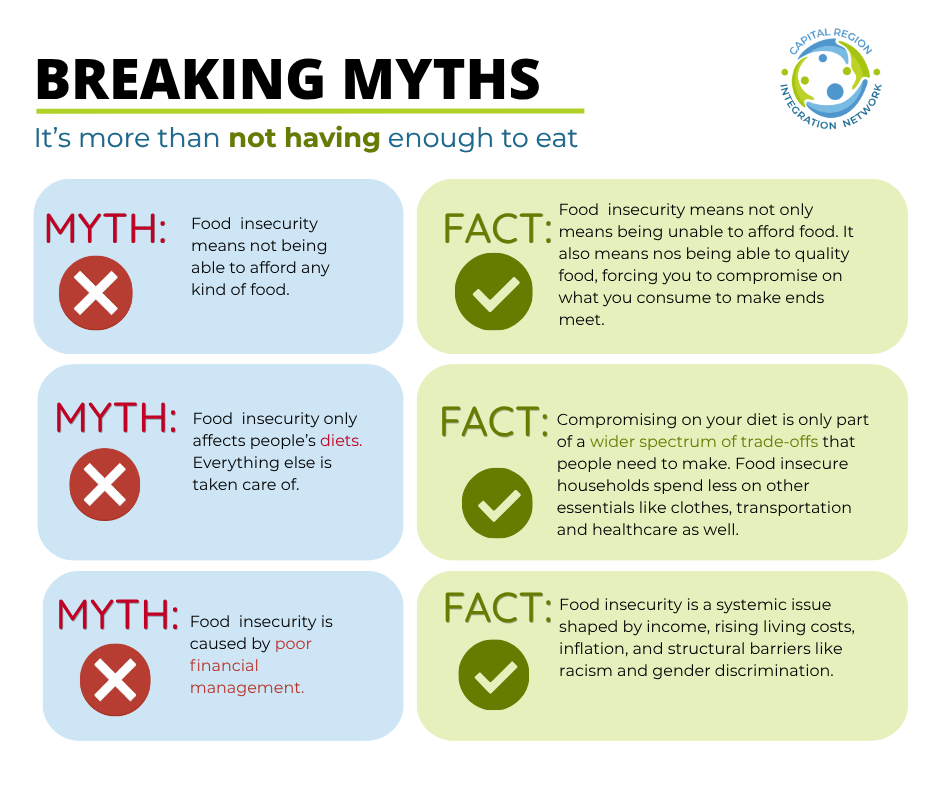
Food insecurity is becoming an increasingly common issue across Canada, especially among post-secondary students. While many people associate food insecurity with not having enough food, it can also mean worrying about grocery costs, sacrificing the quality of meals, skipping meals altogether, or having to choose between food and other essentials such as rent, transportation, healthcare, and even social wellbeing.
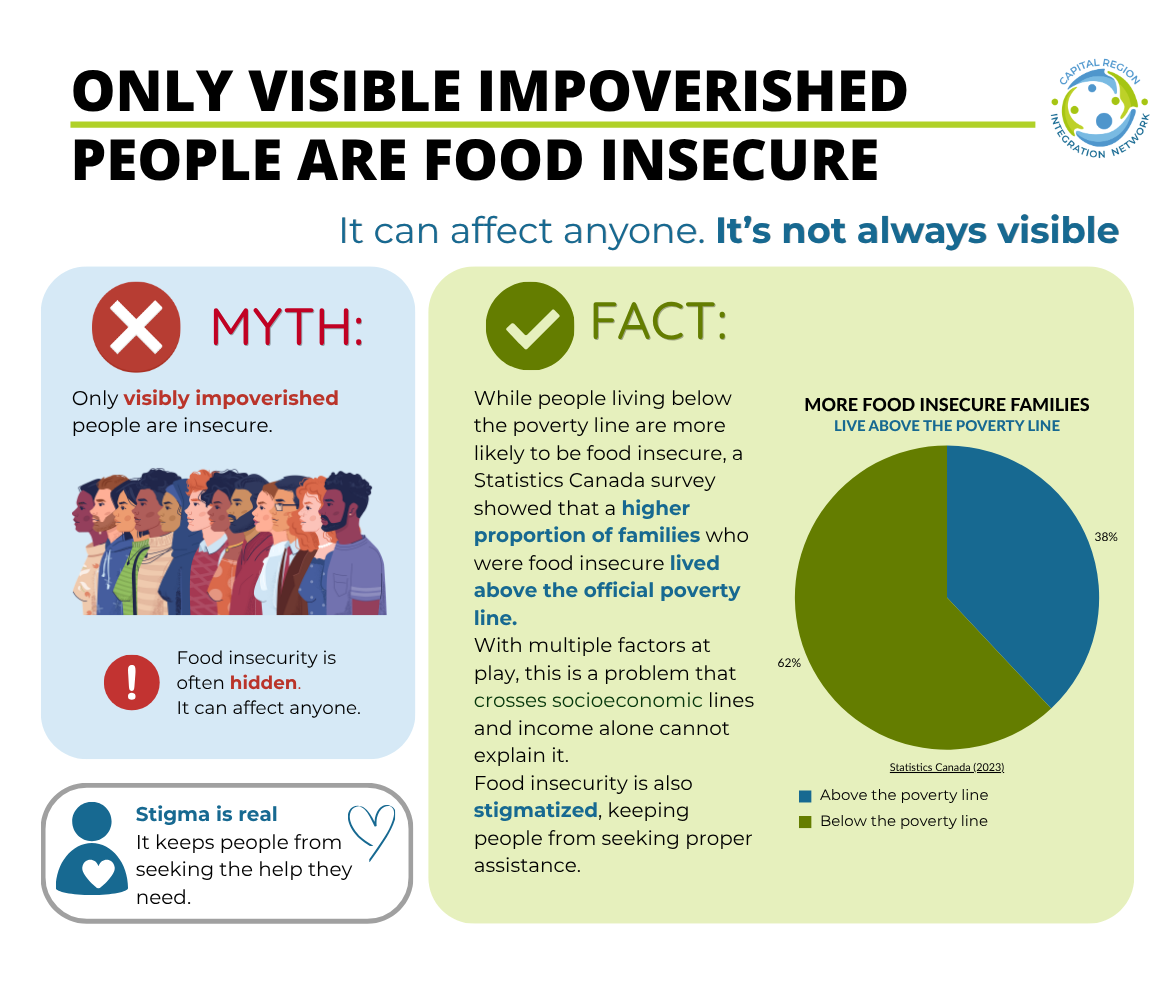
Food insecurity is closely connected to larger systemic issues including rising living costs, inflation, unstable income, and other social and economic barriers. It can affect anyone, including people who are employed, attending school, or living above the poverty line.
“The spending patterns of food-insecure households suggest that they prioritized essential needs above all else.”
Breaking Myths, Clarifying Facts
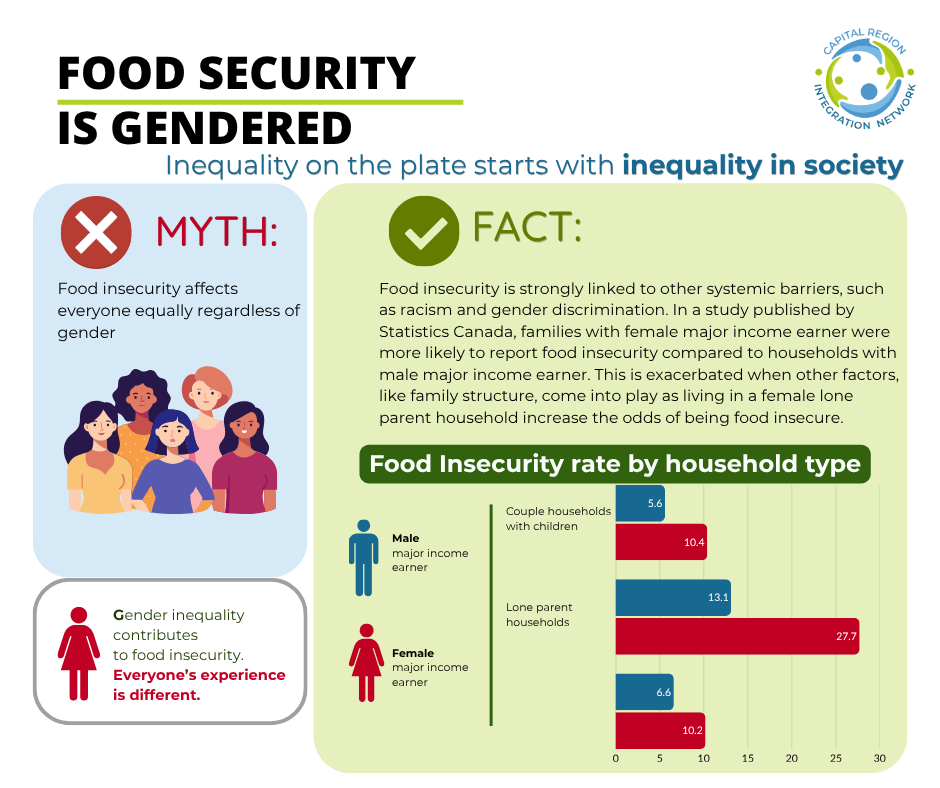
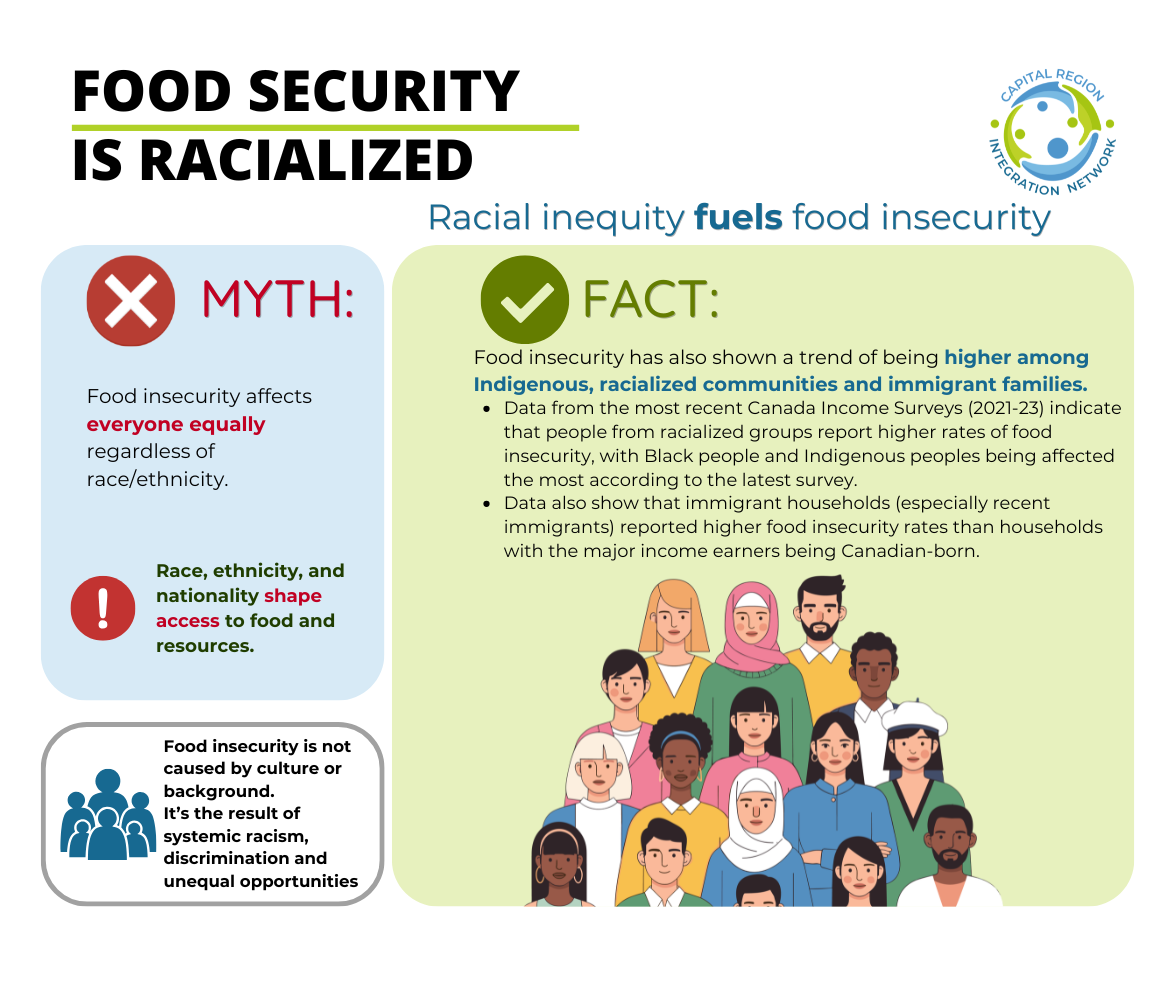
Certain groups are disproportionately affected due to structural barriers that make accessing stable income, affordable housing, and essential resources more difficult.
Research consistently shows higher rates of food insecurity among women-led households, racialized communities, Indigenous peoples, immigrants, and newcomers.
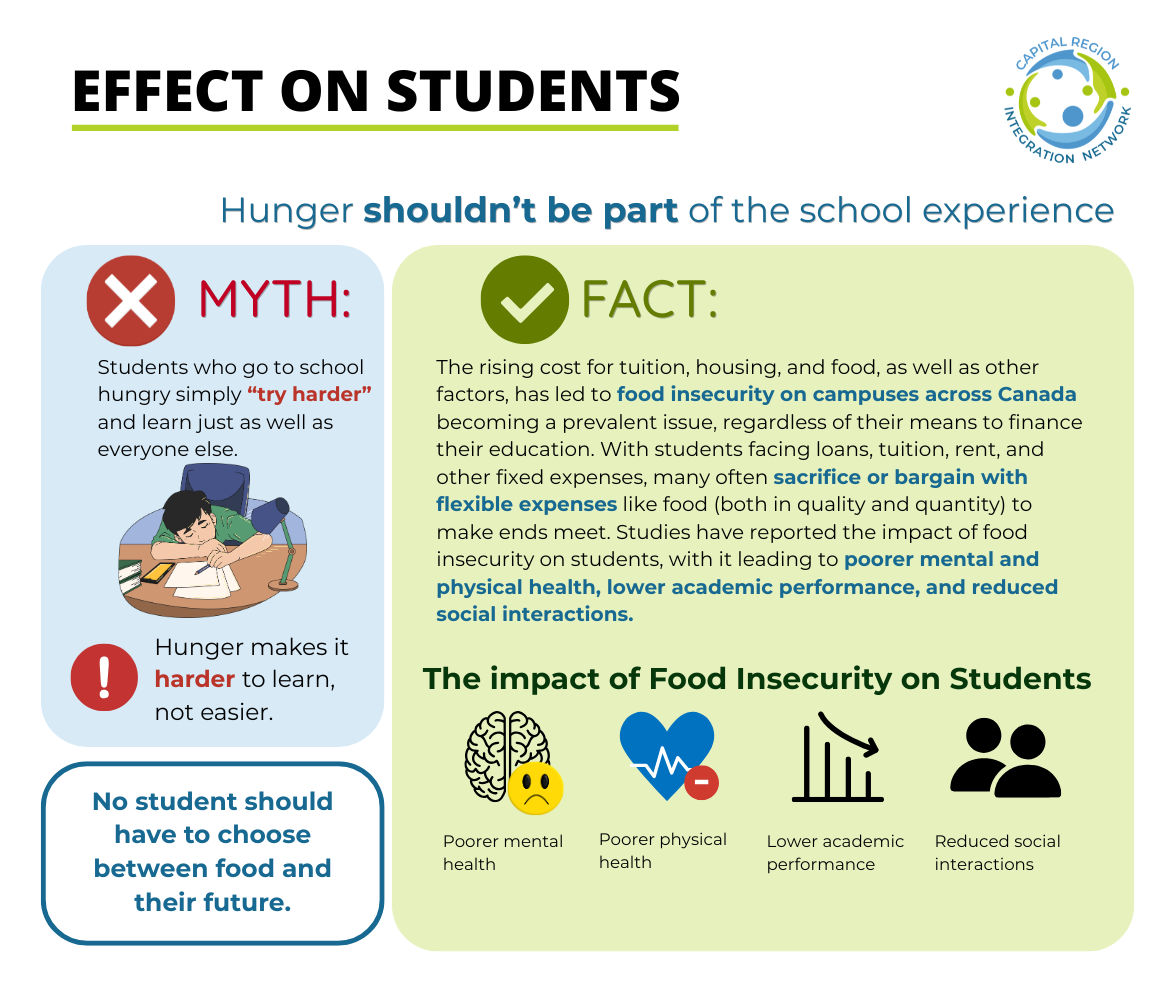
Post-secondary students have also become increasingly vulnerable as tuition, housing, and living costs continue to rise across the country, leaving many to balance academic responsibilities while struggling to afford basic necessities.
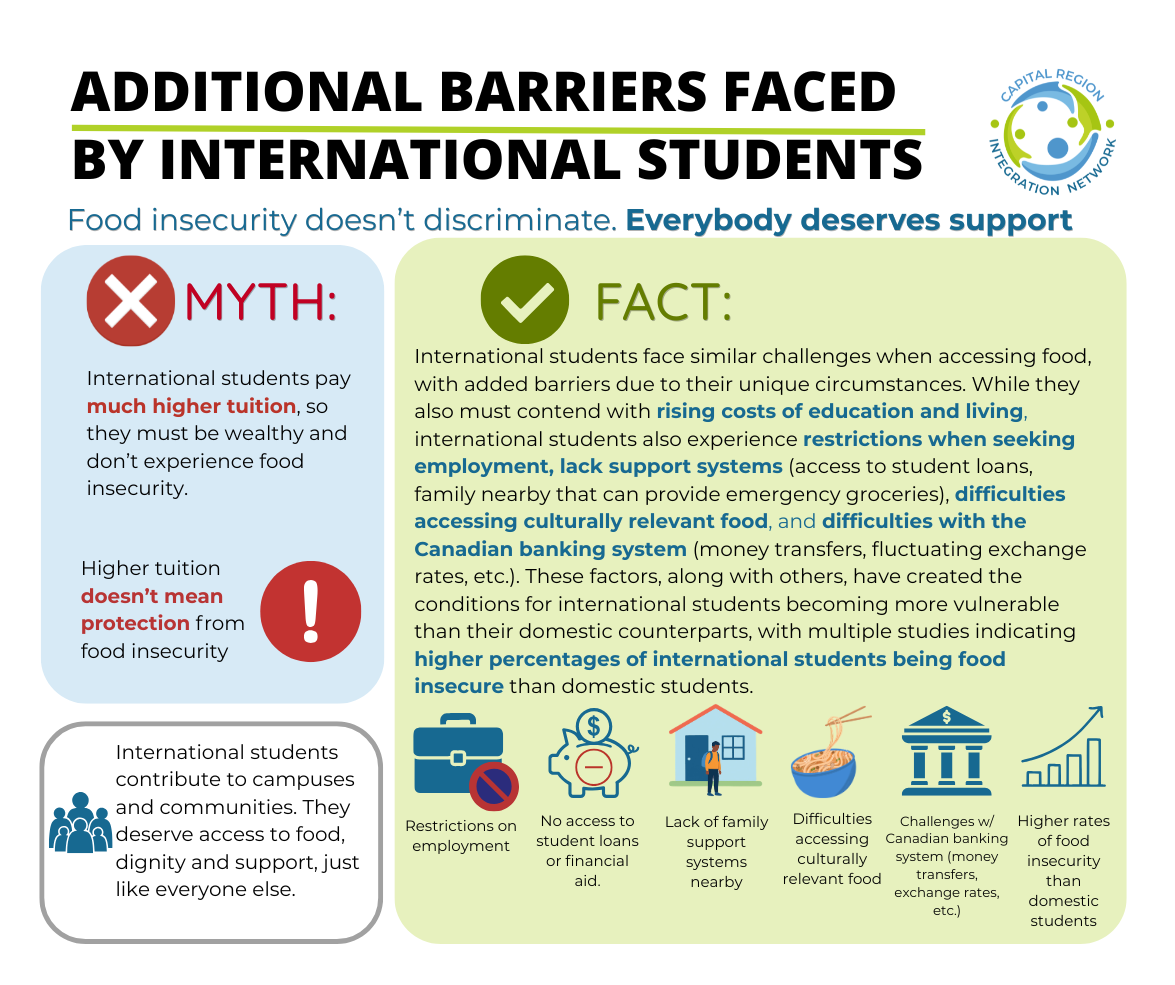
For students, the effects of food insecurity go far beyond hunger. Studies have linked it to increased stress, poorer mental and physical health, lower academic performance, and reduced social participation. International students may face additional challenges, including higher tuition costs, limited support systems, employment restrictions, fluctuating exchange rates, and difficulties accessing culturally familiar foods.
Connecting our Community with Support
To help address these challenges, the campaign will promote resources available to students in Fredericton and surrounding communities, including campus food programs, community meal services, grocery support initiatives, and financial literacy resources.
Designed as a simple, easy-to-follow infographic series, the campaign will use clear visuals, “Myths vs. Facts” content, practical budgeting tips, and educational information to make conversations around food insecurity more accessible, engaging, and easier to understand for students and the broader community, while also helping reduce the stigma surrounding the issue.
By raising awareness and connections with local support, the Welcoming Kitchens Network hopes to foster a more informed, inclusive, and compassionate community where conversations around food insecurity are met with understanding rather than stigma. The campaign will officially launch this September alongside a new Food Security section on CRIN’s website, creating an accessible hub for resources, information, and community and student support.