

Sometimes, you meet someone before you actually meet them.
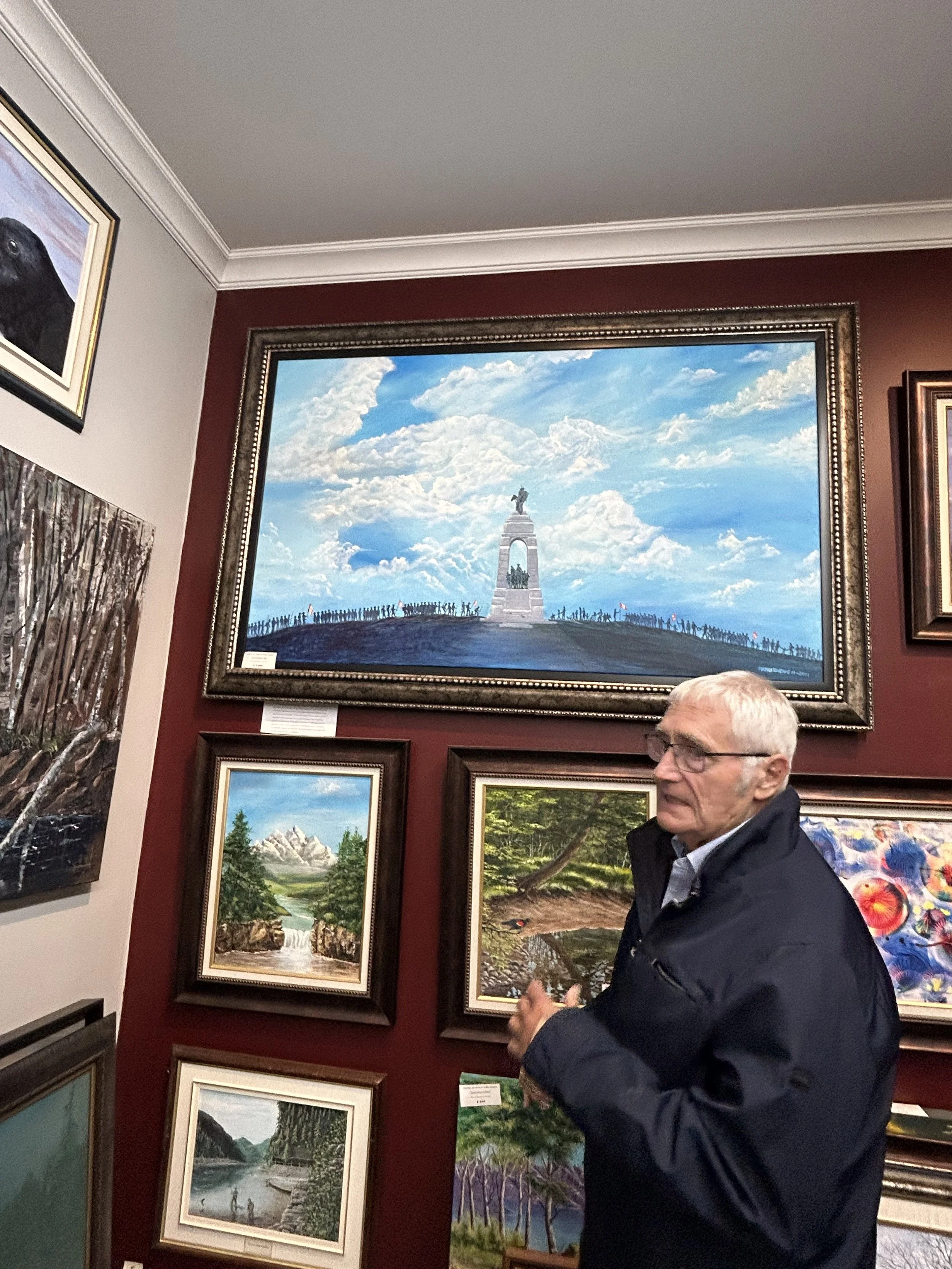
Robin Hanson and Remembrance Day
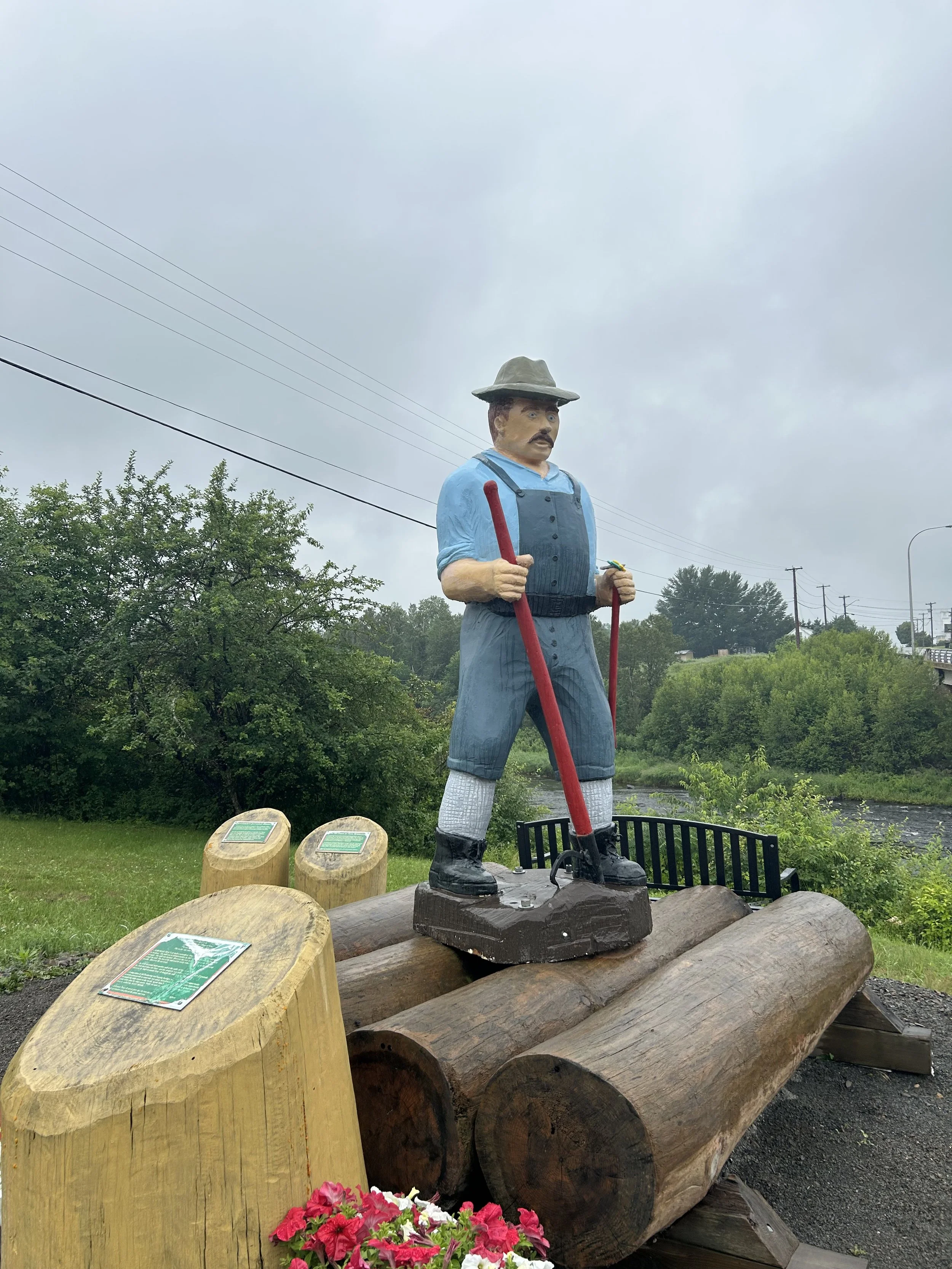
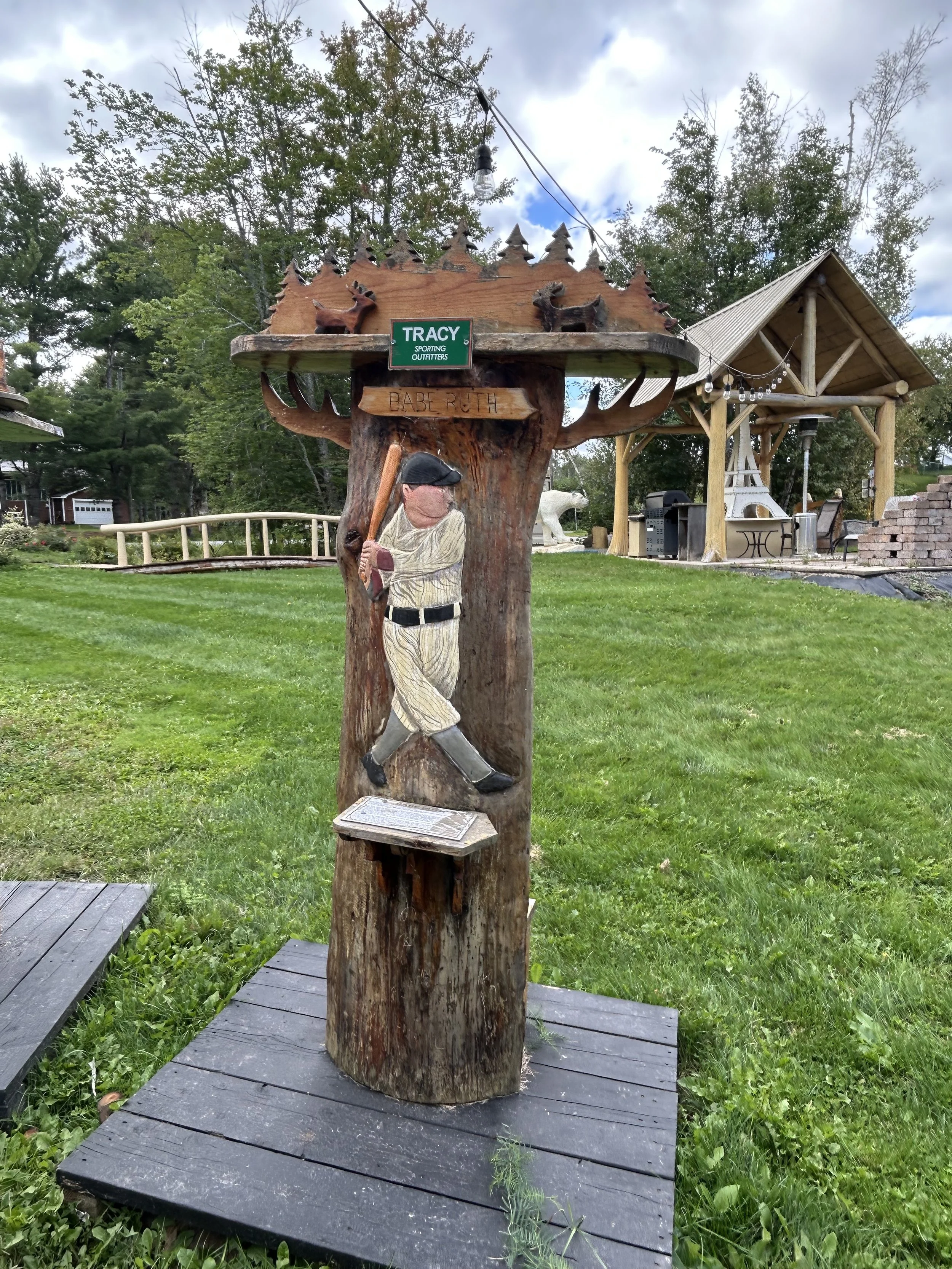
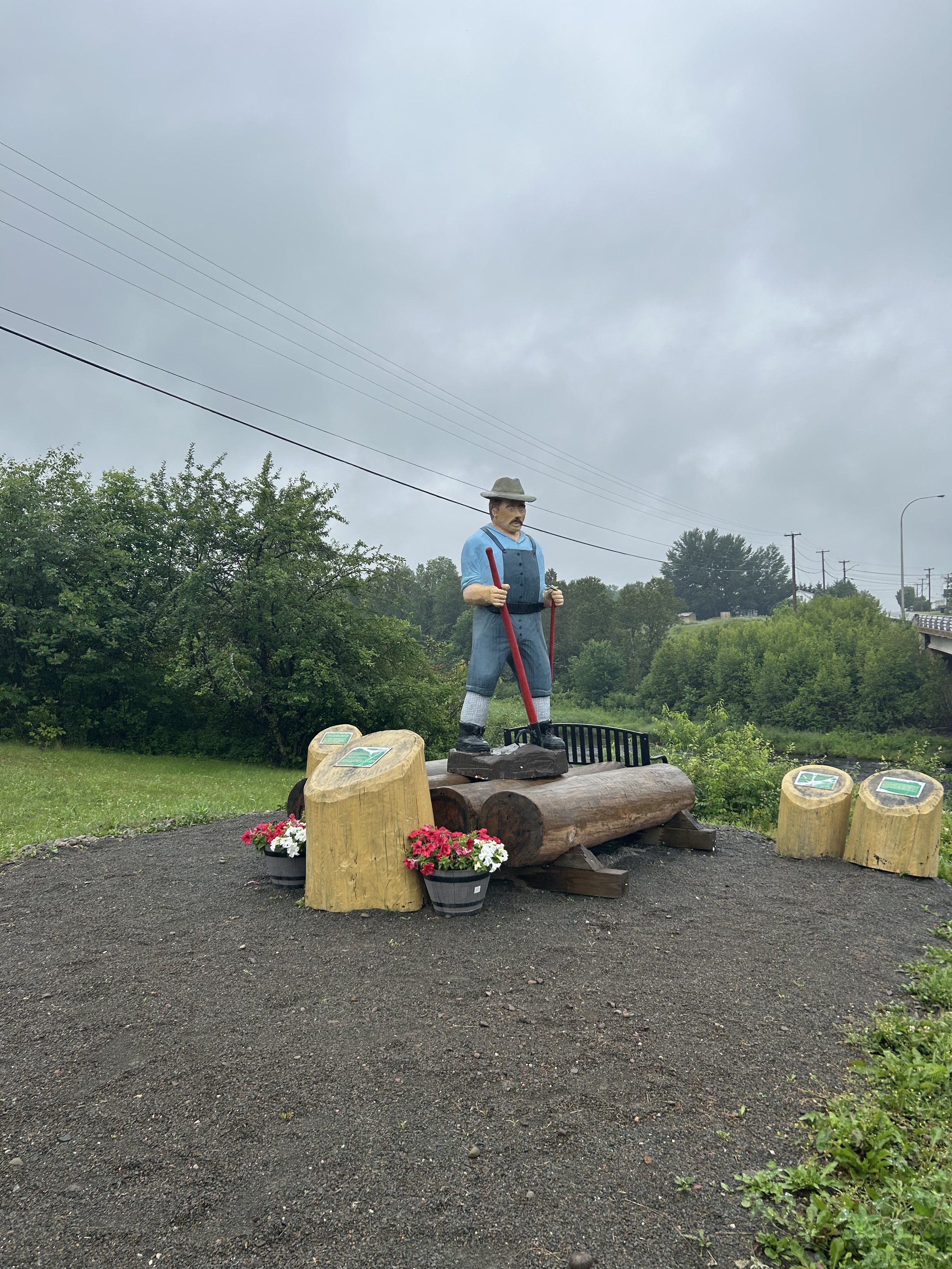
During our Ignite Marketing Team’s Entity Visits across the region, we had already encountered the work of New Brunswick artist Robin Hanson before we had the chance to meet him. Our first introduction came when we saw his sculpture of Jeremiah Tracy in Tracy and started noticing how his work could bring local history to life.
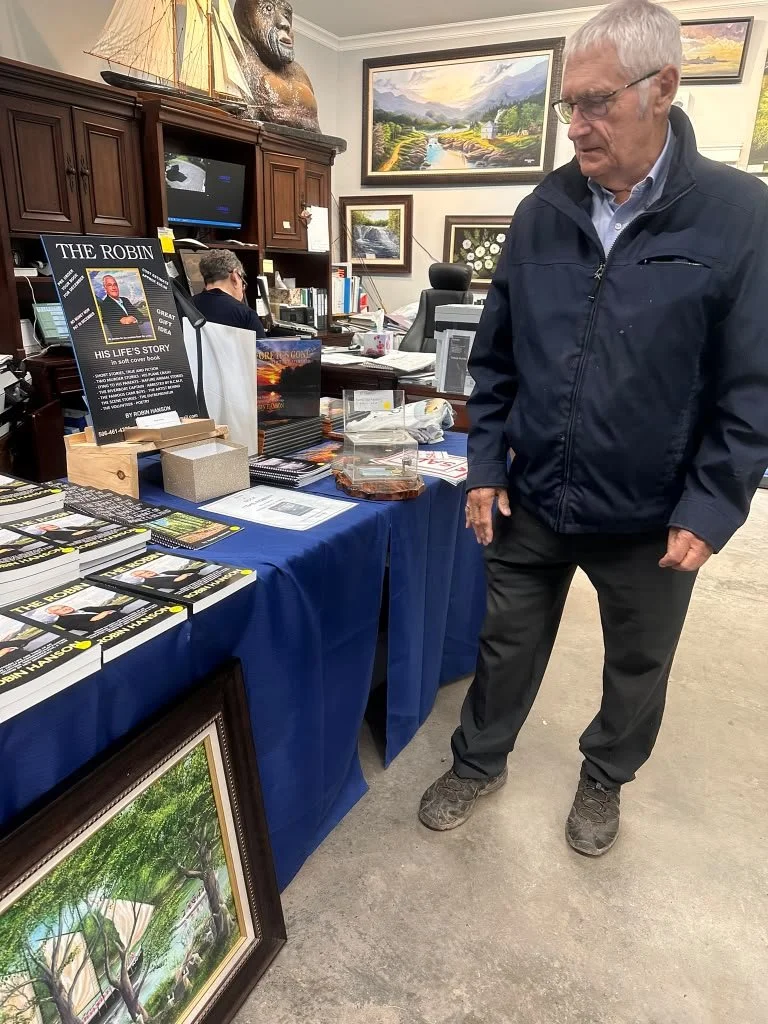
Then our August Entity Visit took us to Sunbury-York South, where we finally met the artist behind the work. Robin welcomed us as our host and took us on an incredible tour of his gallery: Hanson Art Gallery, Sculpture Garden and Nature Preserve.
There was a lot to take in: paintings, sculptures, wildlife, history and stories woven throughout the property, but the more we learned about his work, the clearer one thing became: Robin doesn't simply make art. He gives it a purpose.
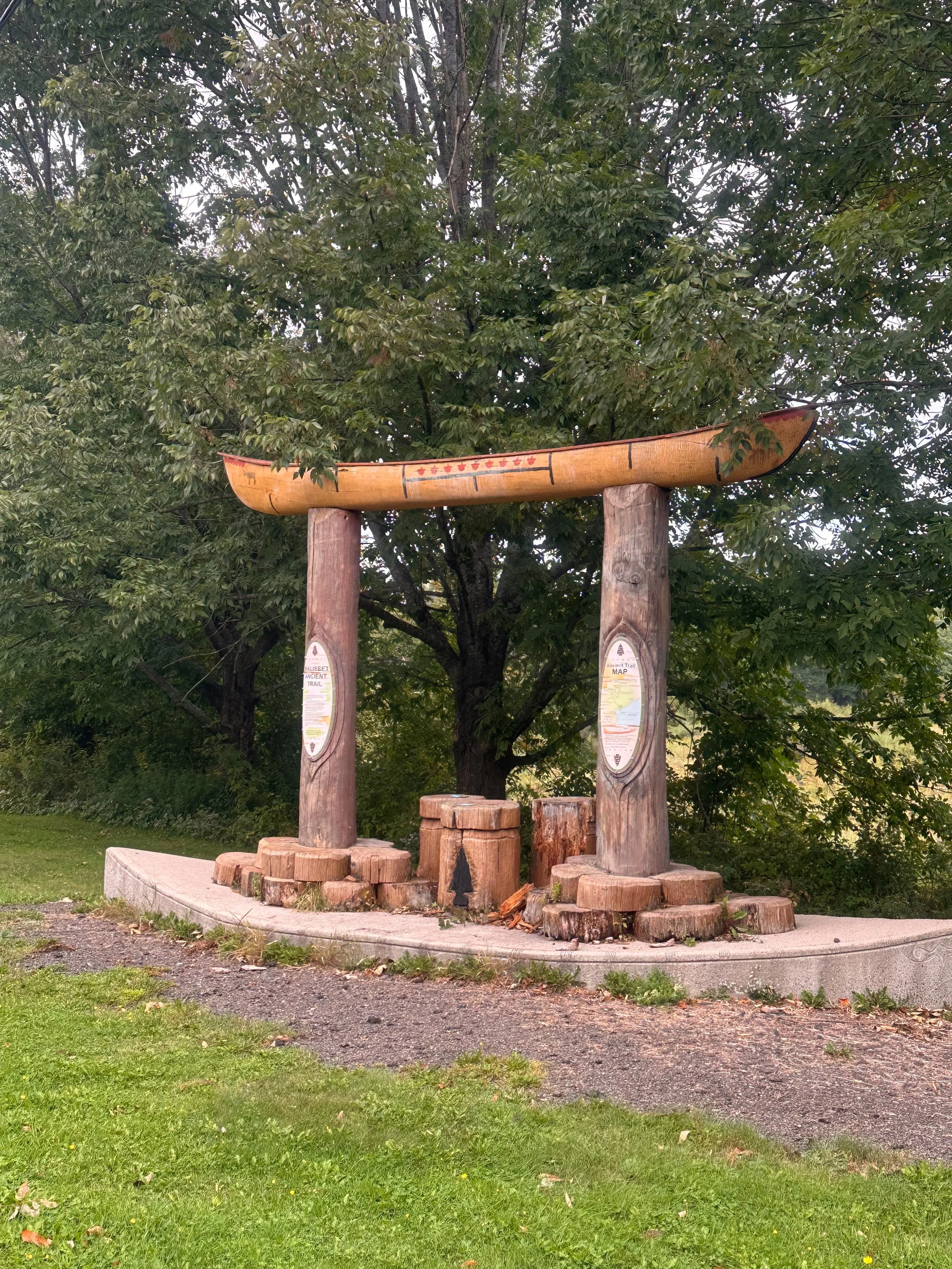
Our connection with his work didn't end there. When we later travelled to Fredericton Junction, we began spotting his work in different places around the community, from Art in the Park, the White Rapids Adventure Trail, to the historic caboose and other unexpected corners of town.
After seeing his work in different communities and then spending time with the artist himself, we started to see the connections between the places, the stories, and the art.
When Art Has a Story to Tell
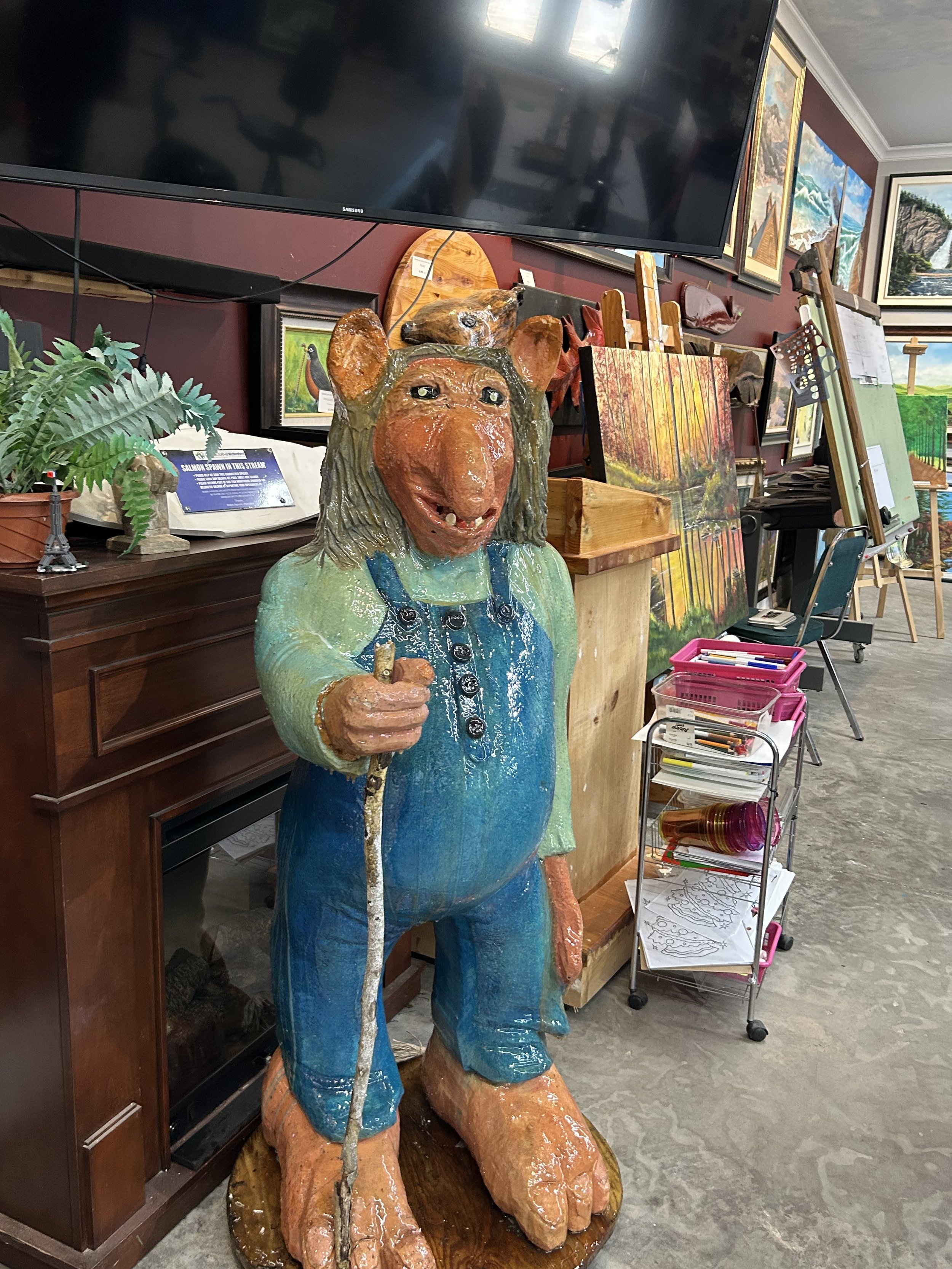
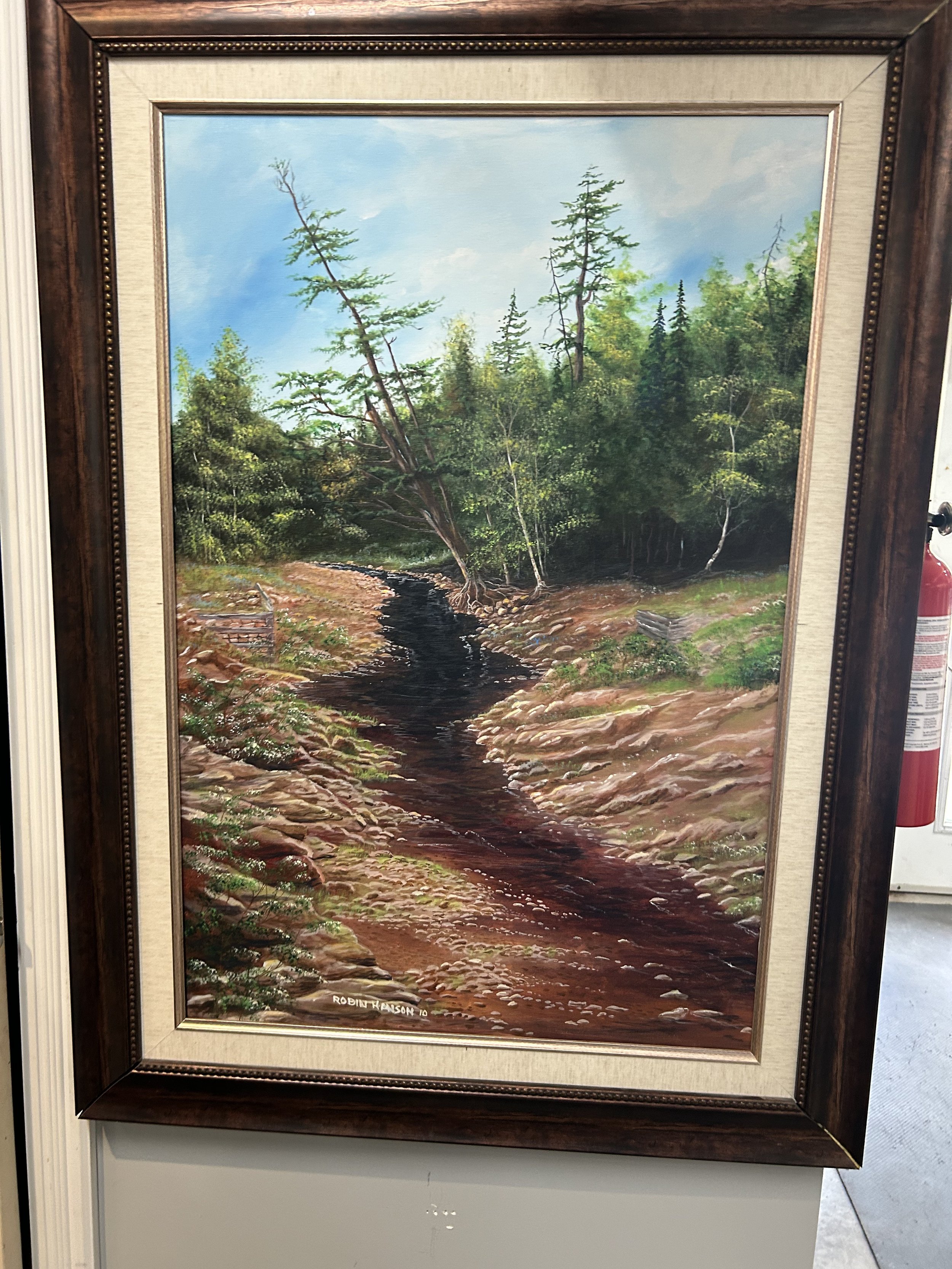
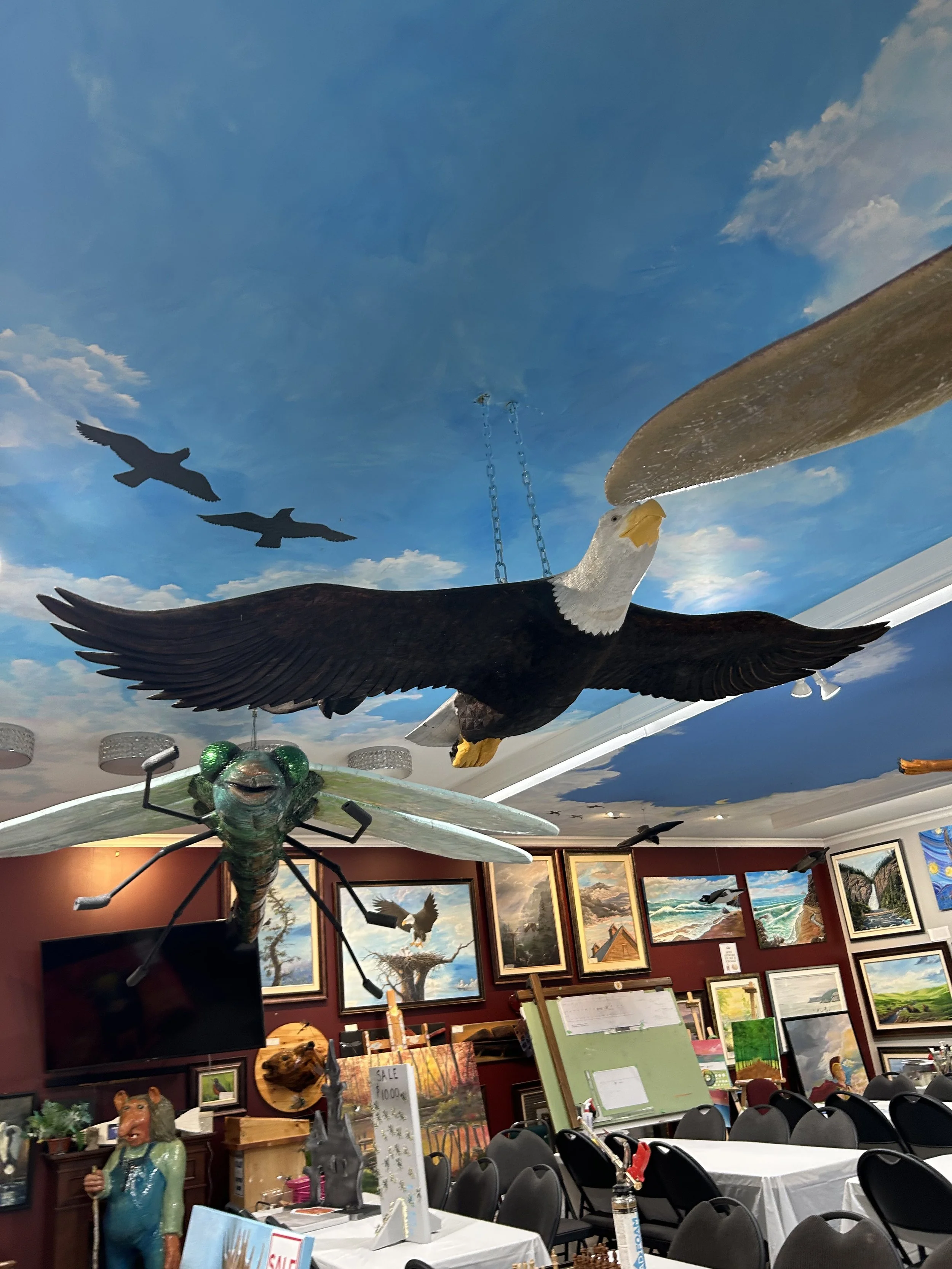
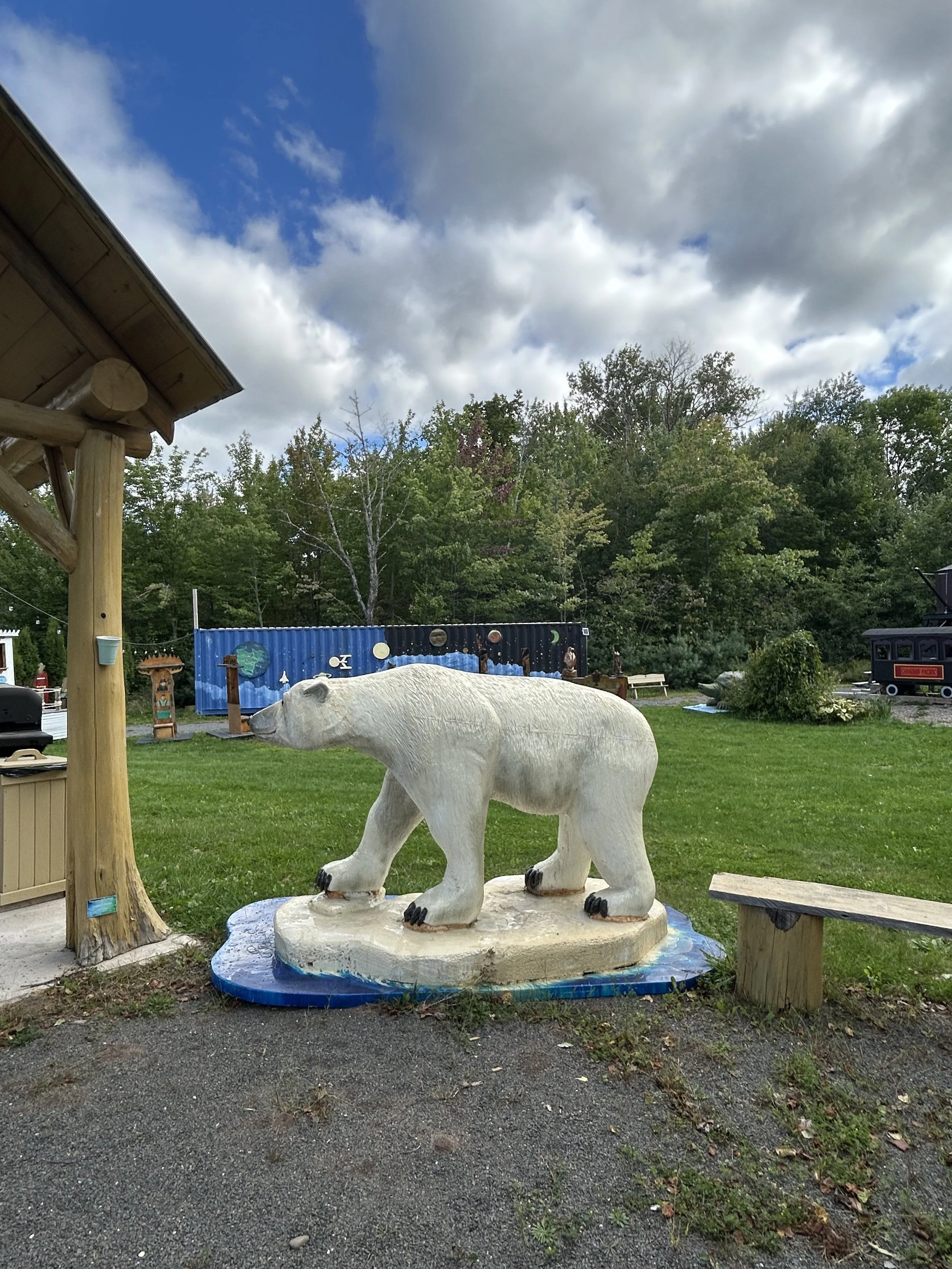
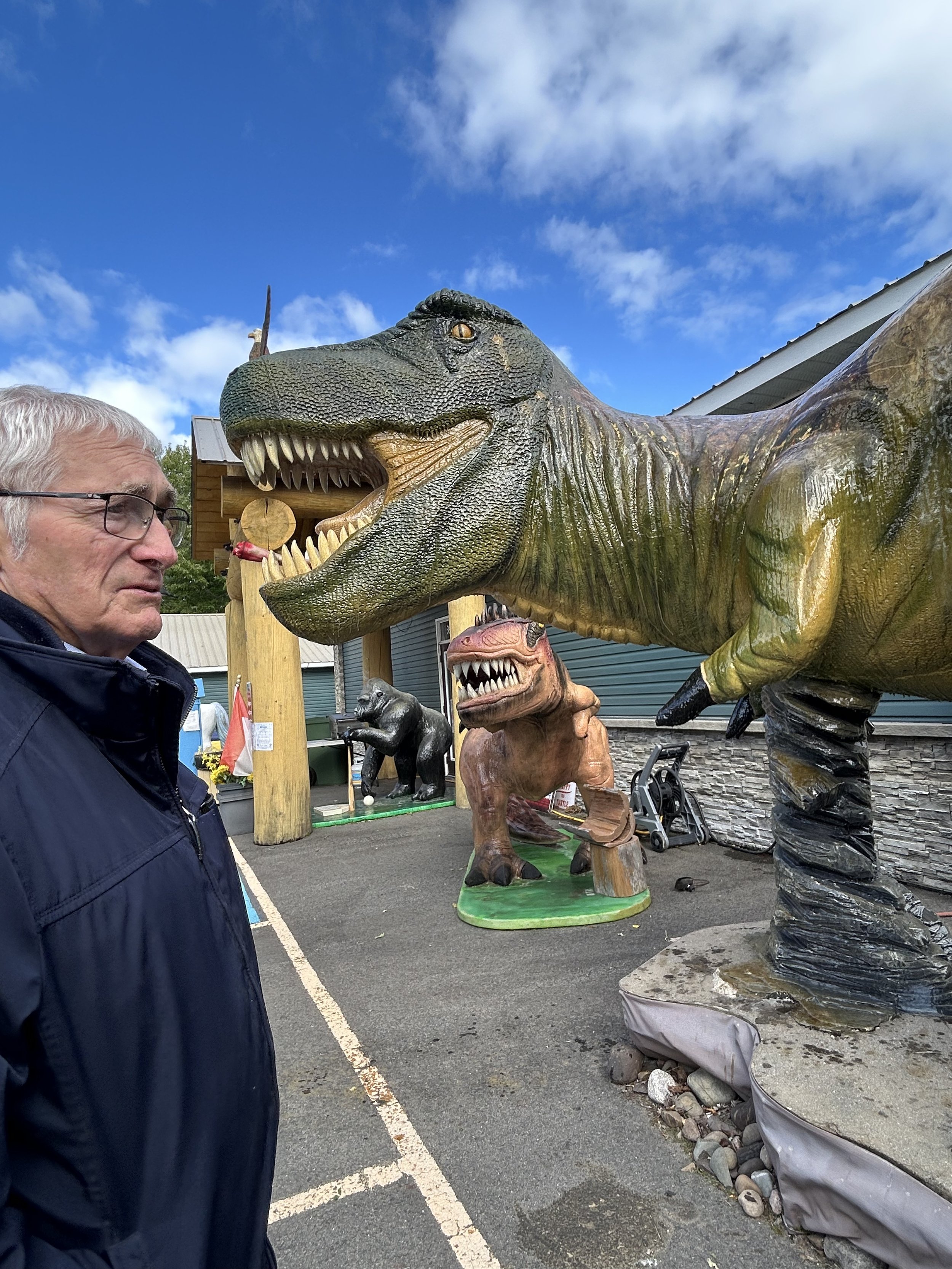
Walking through Robin's gallery, we quickly realized there isn't just one style or subject that defines his work. There are paintings, sculptures, abstract pieces, wildlife, First Nations stories, historical subjects and works connected to people and places close to home.
Some pieces are playful. Others are deeply personal. Some are designed simply to make you stop and look. And some are there to make you think.
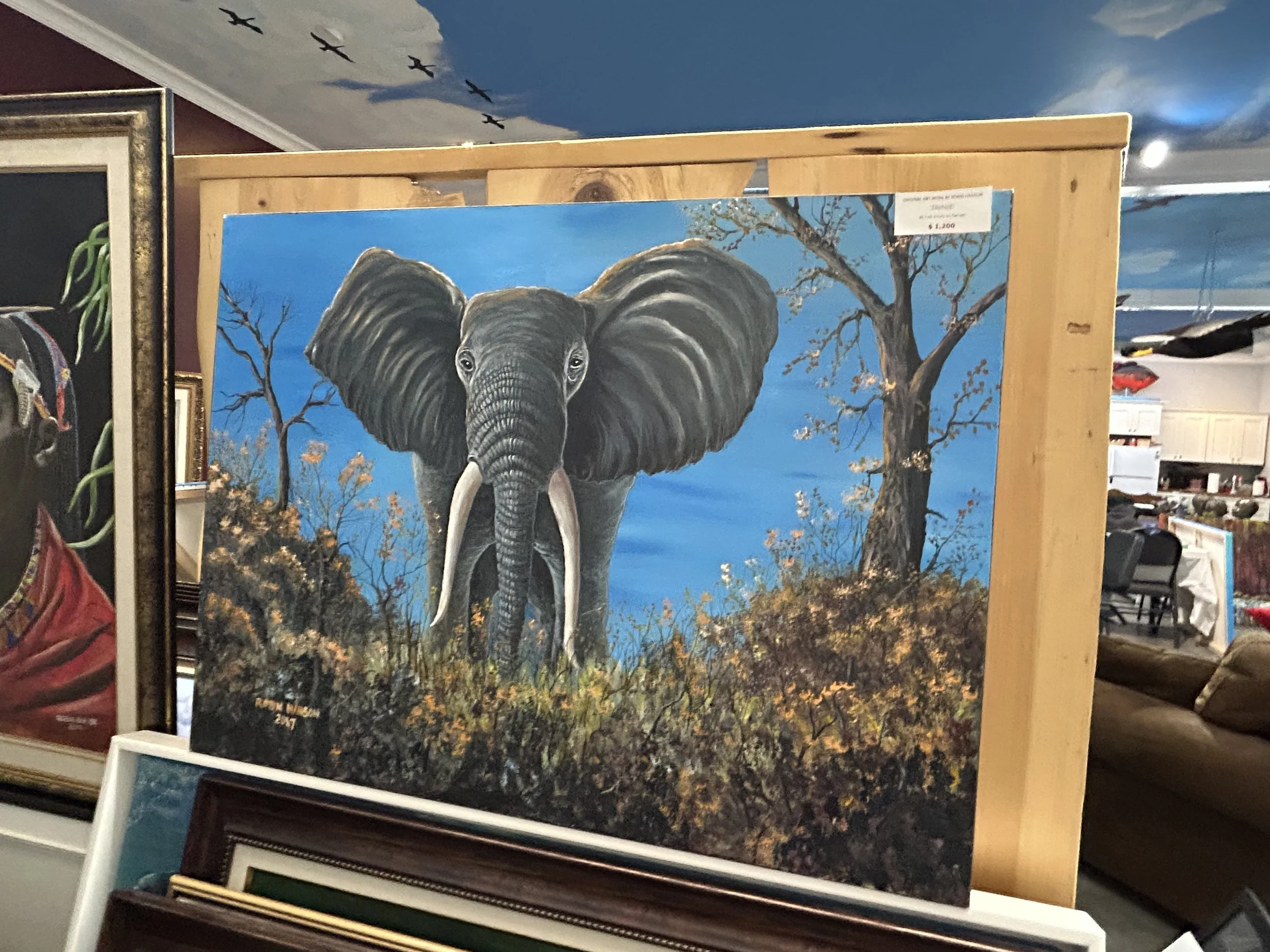
The Matriarch by Robin Hanson
One painting that caught our attention came from a story Robin brought home from a 2013 trip to Africa, where he was travelling with a group from around Fredericton when they came across a herd of about 40 elephants. Their guide told them to stay quiet and watch the matriarch. She would come into the opening, look them over and smell the air. If everything was okay, she would turn and lead the herd toward the river.
That's exactly what happened.
Once the matriarch decided they were safe, the herd moved toward the river. The guide then drove the van right into the herd, close enough that they were surrounded by elephants.
Robin later turned that experience into a painting.
It's a good example of how his artwork often starts with a story. He isn't simply painting what he sees. He is capturing something he experienced and sharing it with others.
For Robin, the idea that every piece should have meaning is important. That purpose might be conservation, remembrance, history, or simply making someone happy. Sometimes, it is about making sure a story isn't forgotten.
Bringing History to Life
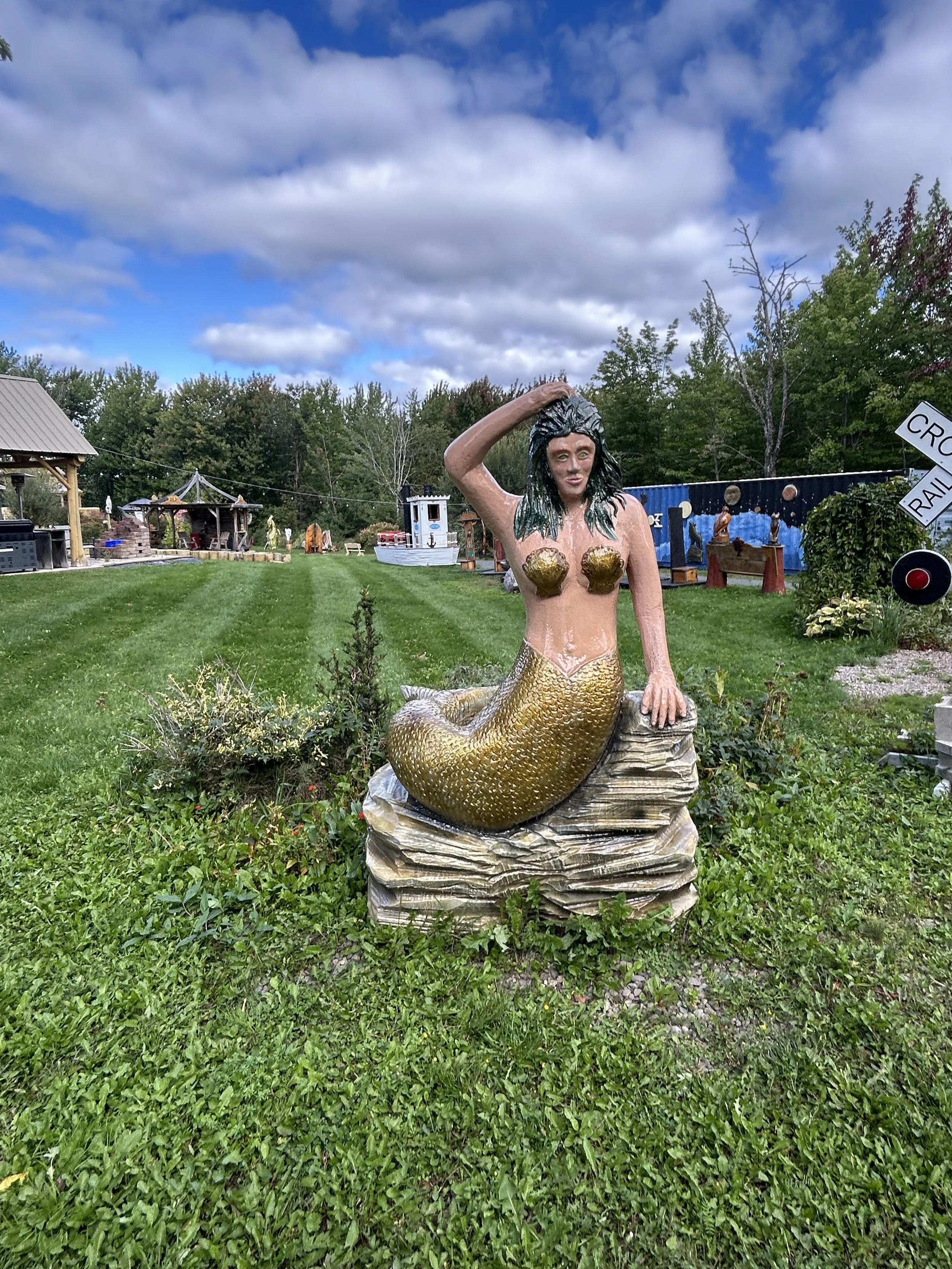
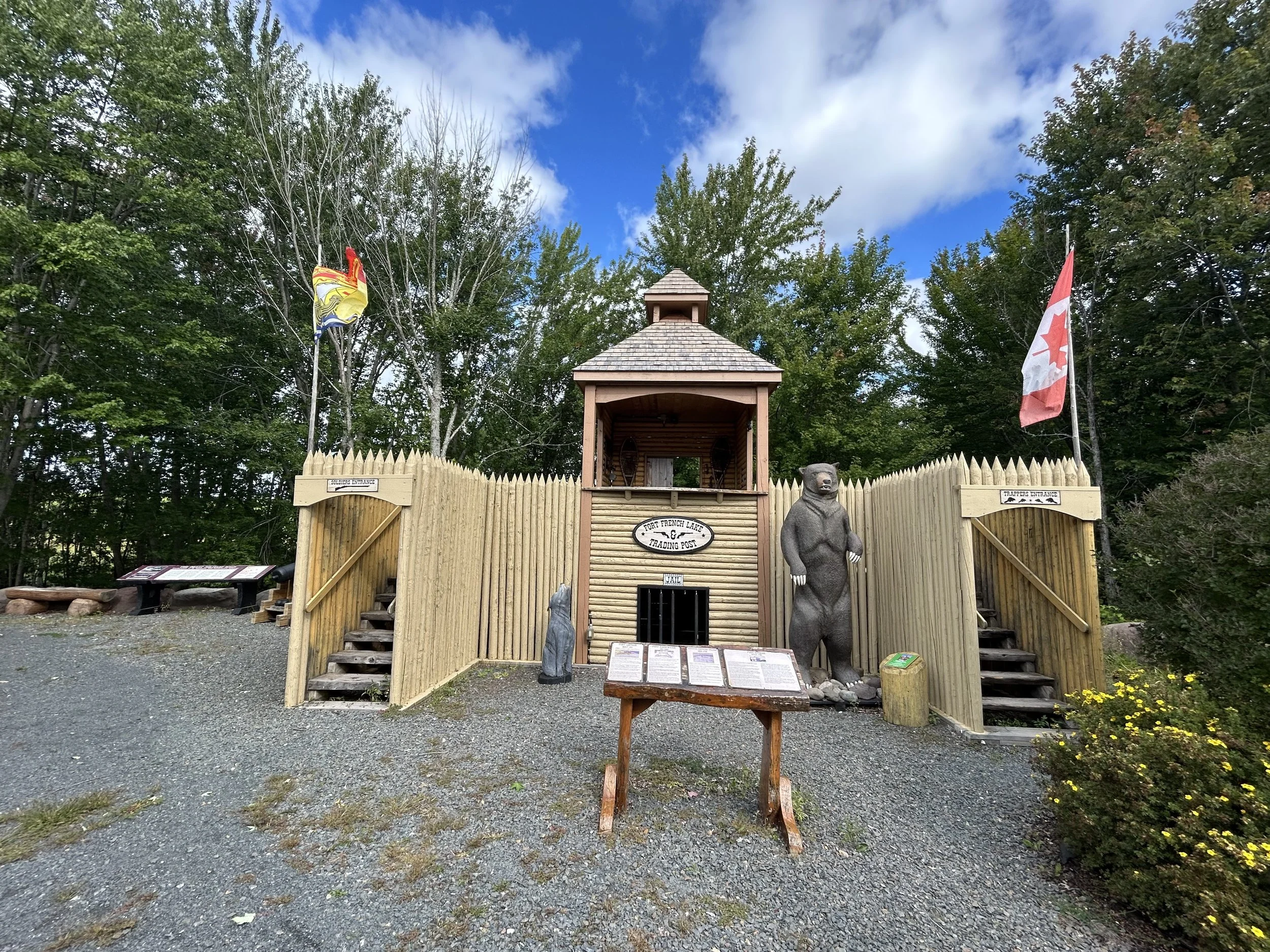
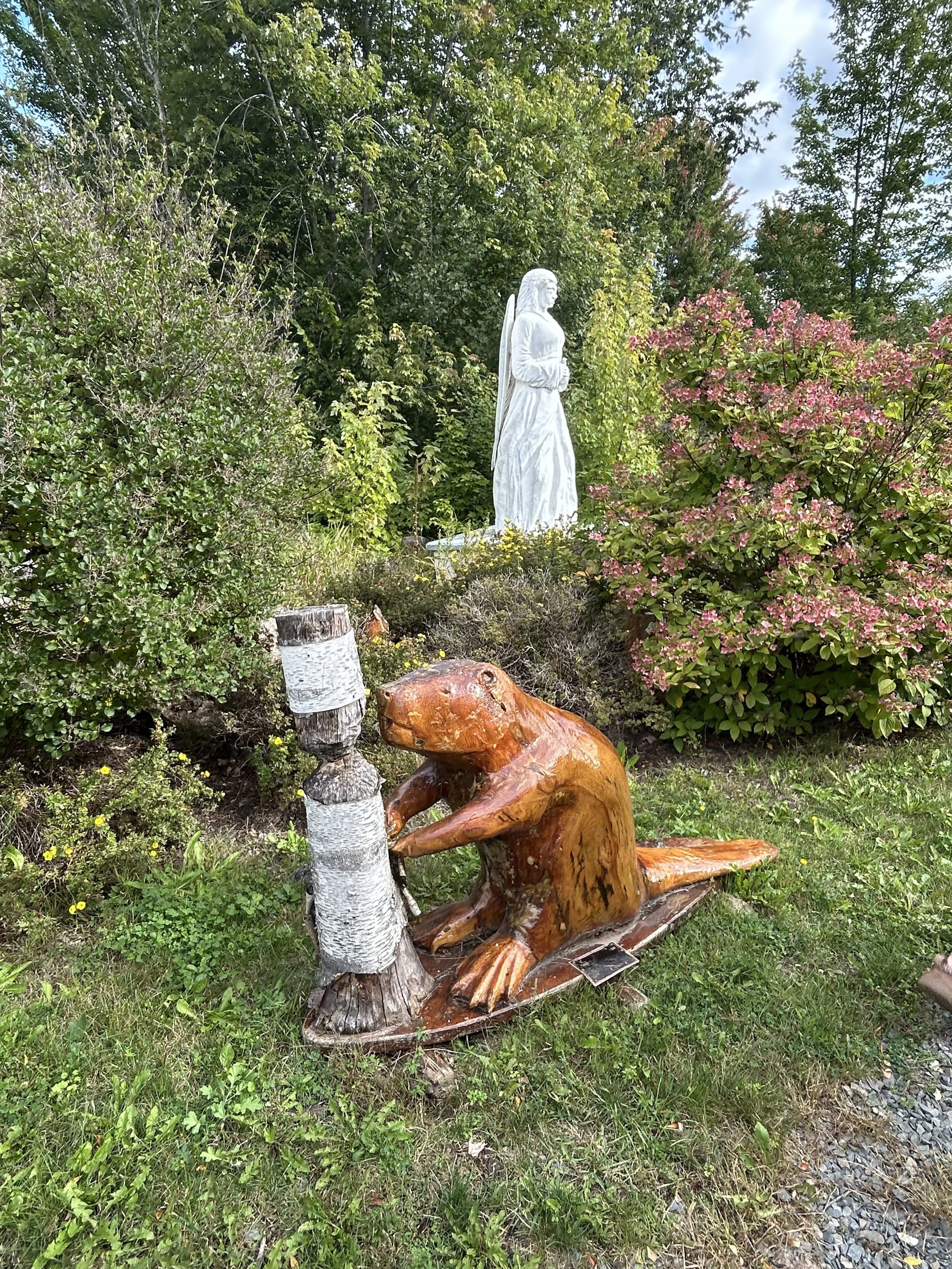
That idea becomes especially visible in Robin's Sculpture Garden.
During our visit, Robin didn't simply show us the sculptures. He shared the stories behind them and gave us a chance to see the space from a different perspective.
As we walked through the garden, there was always something to stop and look at.
One of the pieces that caught our attention was a small model of engine 2929. Robin explained that the original train operated between Fredericton Junction and Fredericton for more than 20 years. It was capable of reaching speeds of 181 km/h, making it one of the fastest trains in Canada at the time.
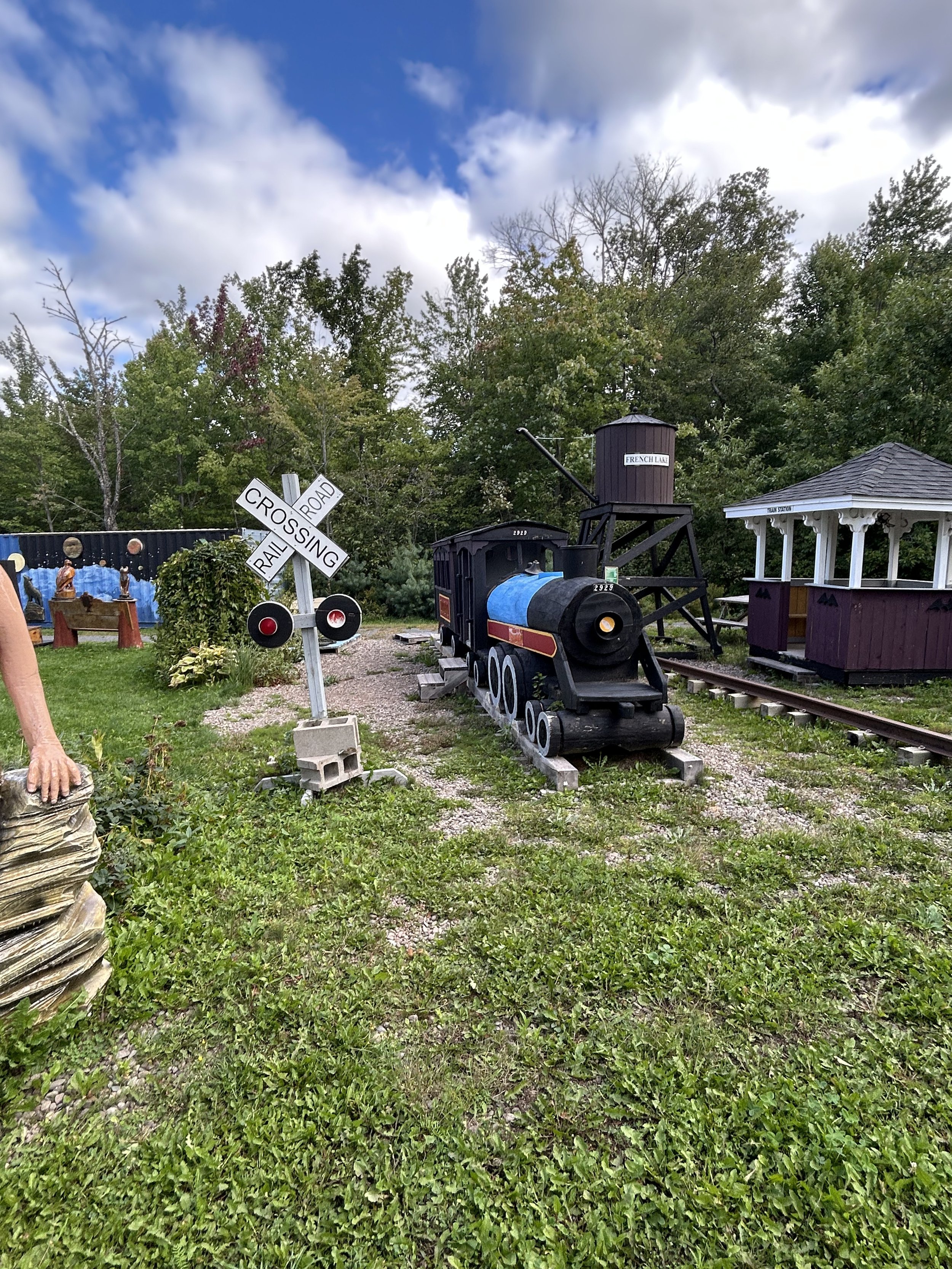
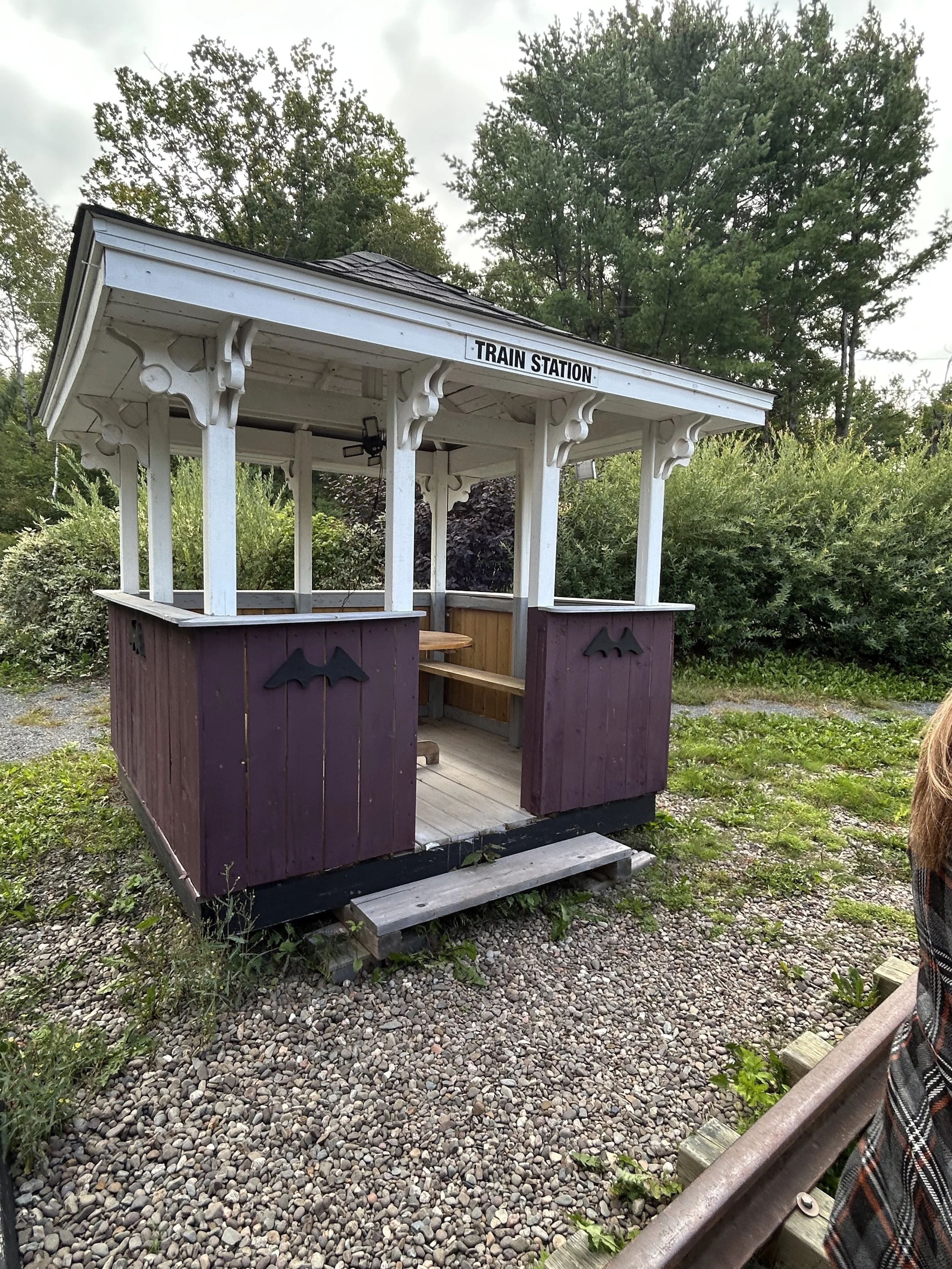
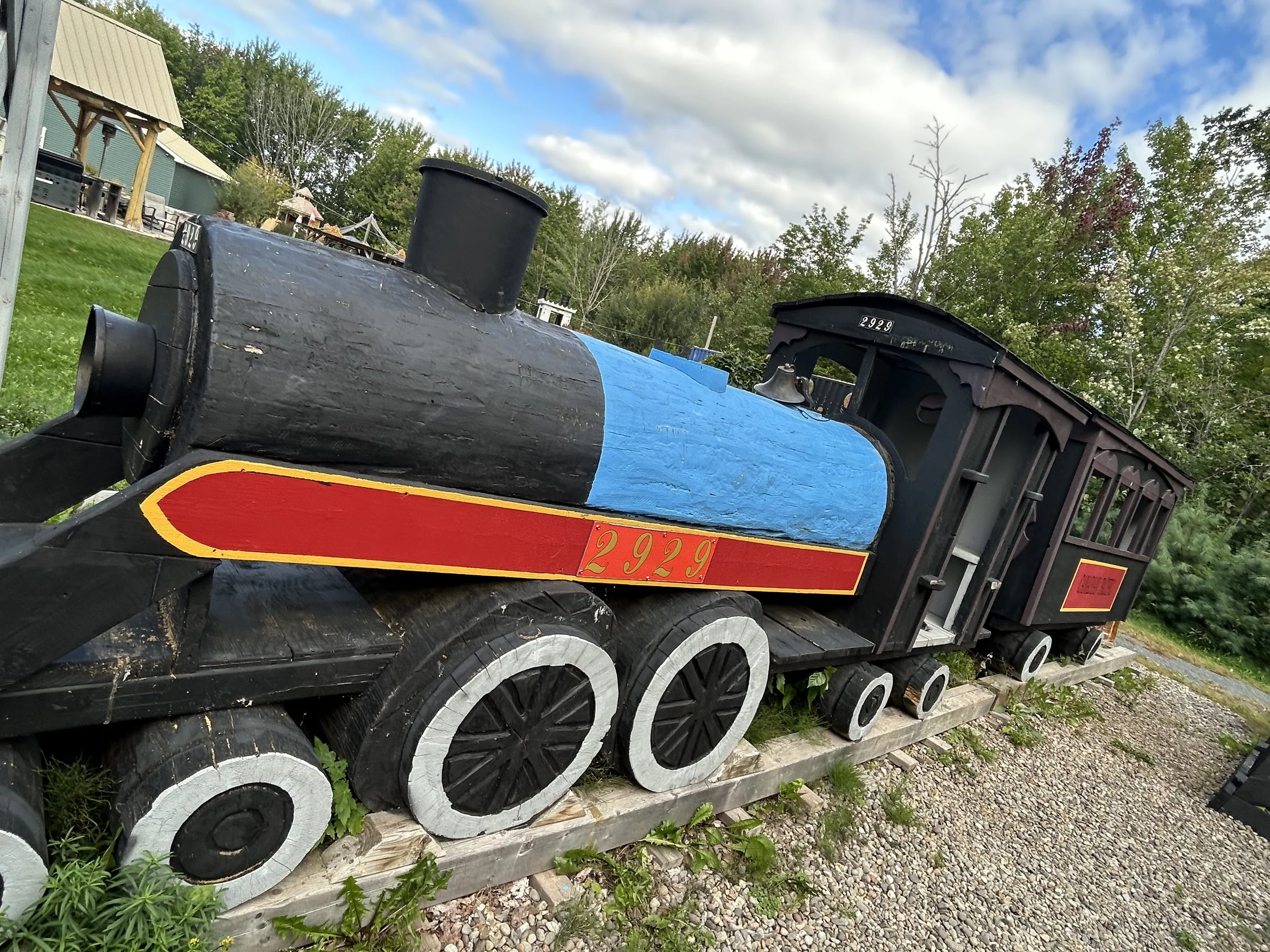
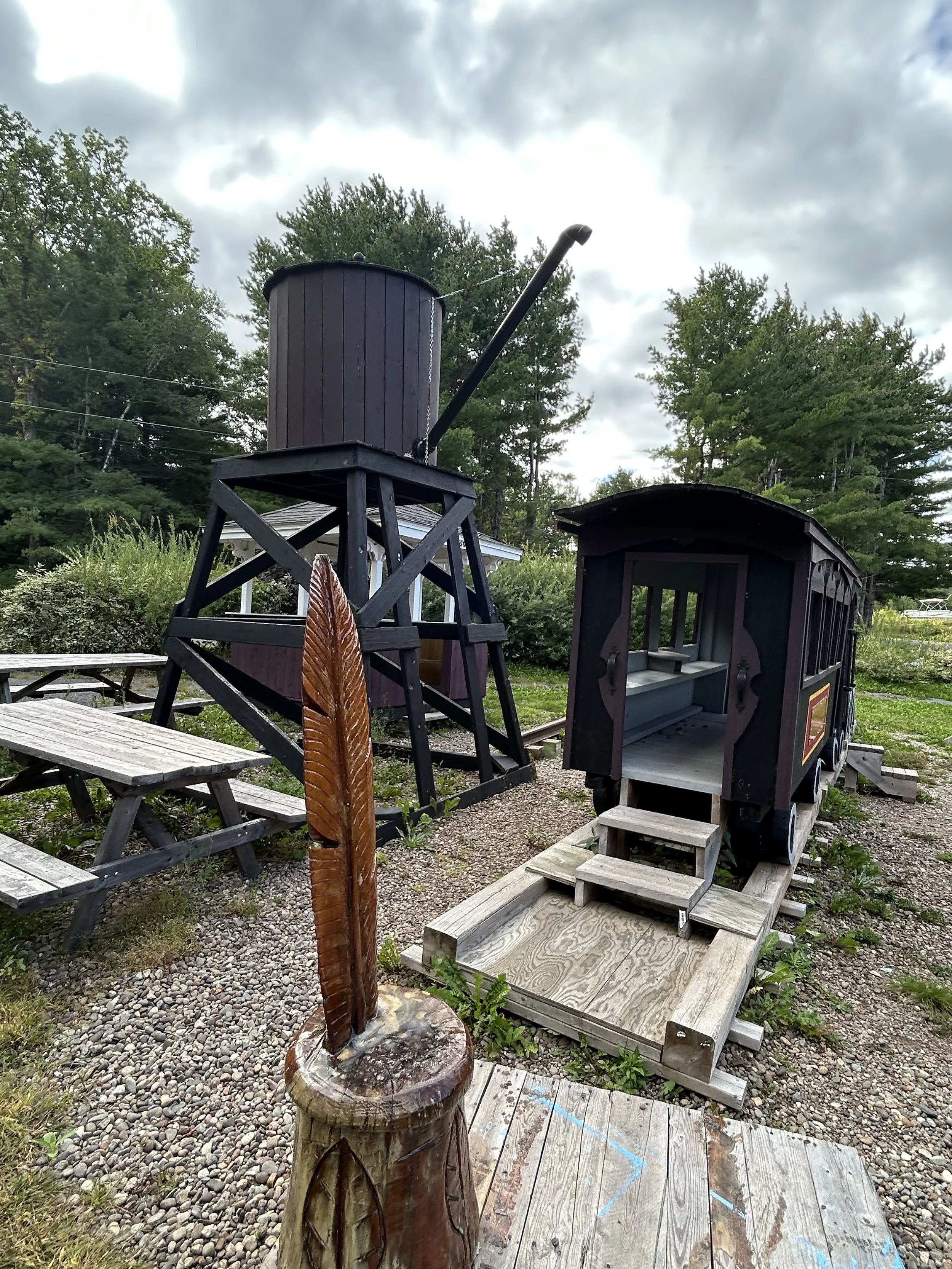
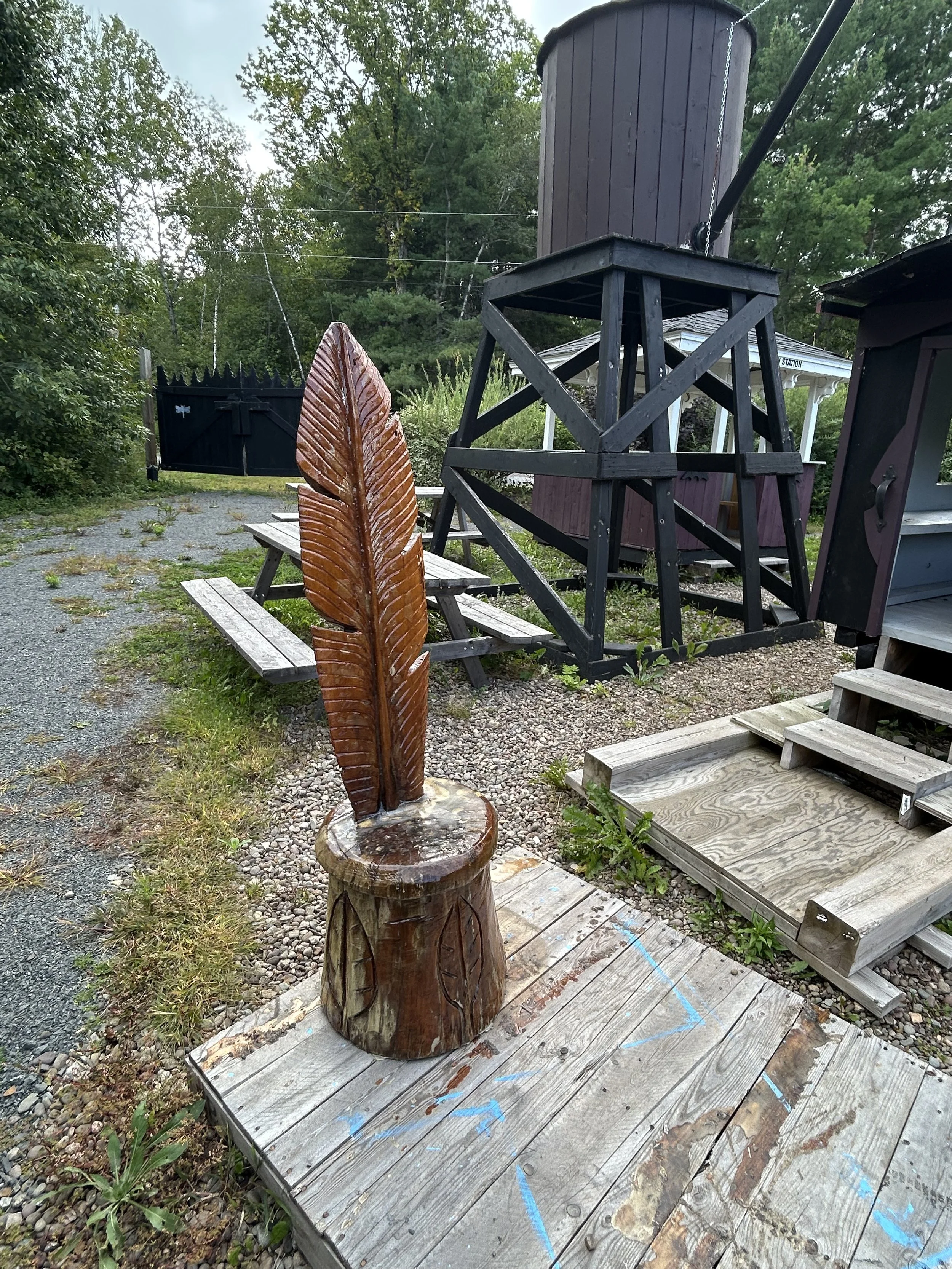
Robin told us he wanted to create something that children could climb on and interact with, but there was more to the model than that: standing beside it made it easy to imagine how different that railway experience must have been, and how a piece of local history can become something children can see and explore for themselves.
For Robin, it seems that bringing history to life is often about creating something people can experience for themselves. A sculpture or an installation can be something you look at, but it can also be the starting point for a conversation, a history lesson, or a child's curiosity question, and Robin's interest in storytelling doesn't stop at his own property.
Taking the Stories Beyond the Gallery
By the time we visited Robin, we had already seen how his art can become part of a community.
The sculpture of Jeremiah Tracy connects a piece of artwork with the history of the person the village was named after. In Fredericton Junction, his work at Art in the Park is part of the White Rapids Adventure Trail, bringing together art, nature and local history in a space people can explore for themselves.
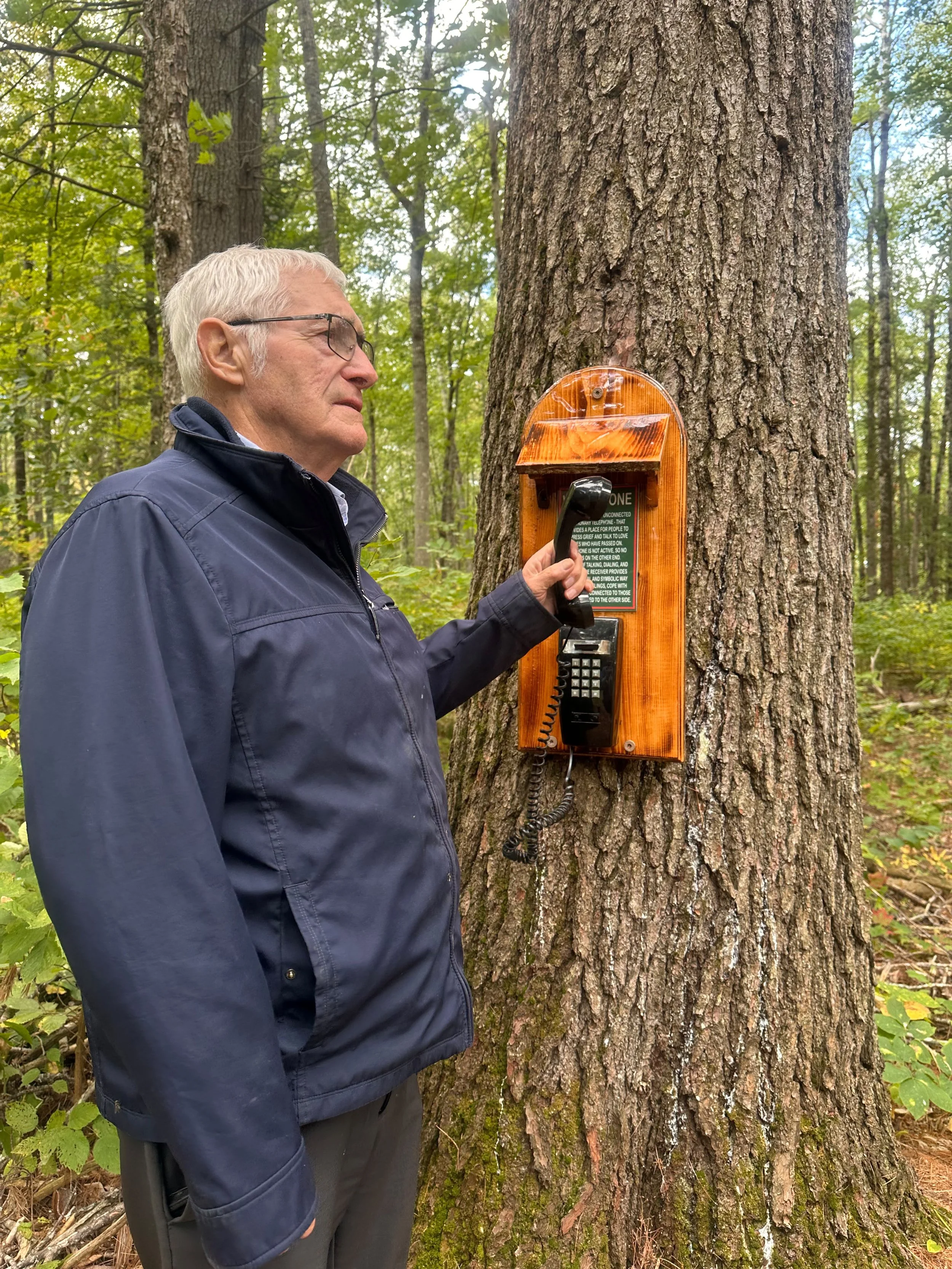
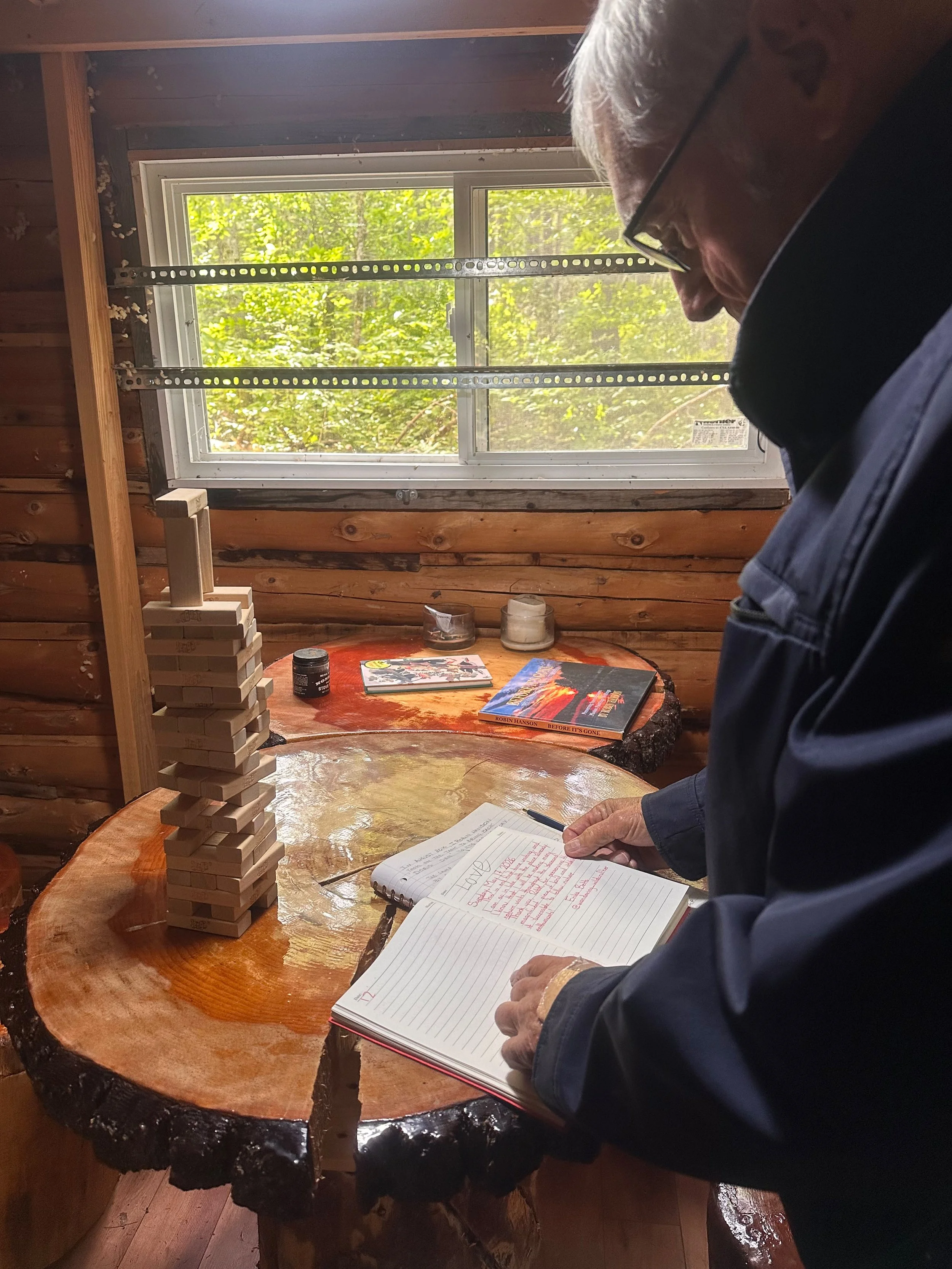
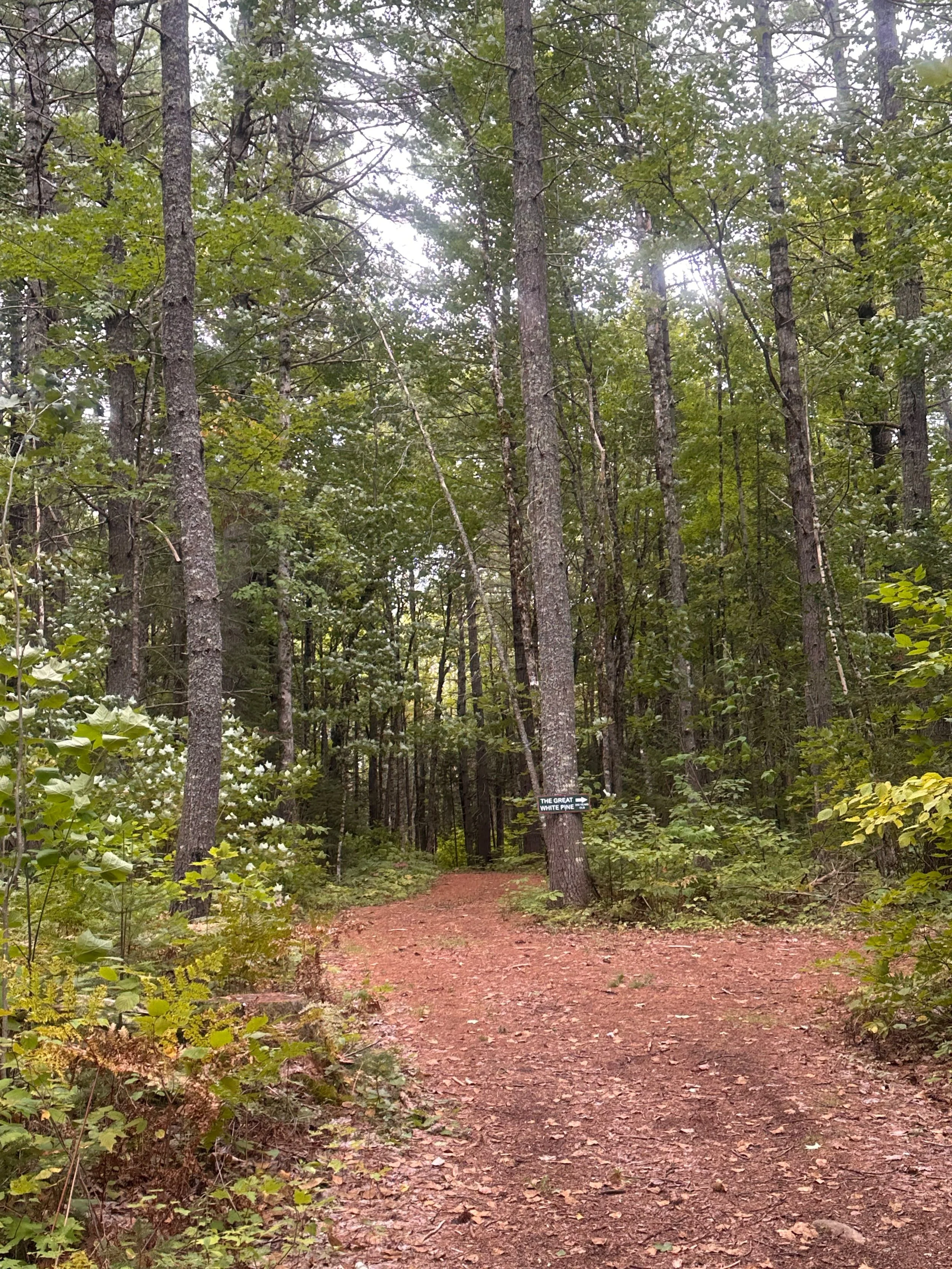
Seeing these pieces in their communities gave us a different perspective when we later walked through Robin's own collection. His art doesn't always ask people to come to a gallery to find a story. Sometimes, he brings the story to them.
And that idea extends beyond the sculptures.
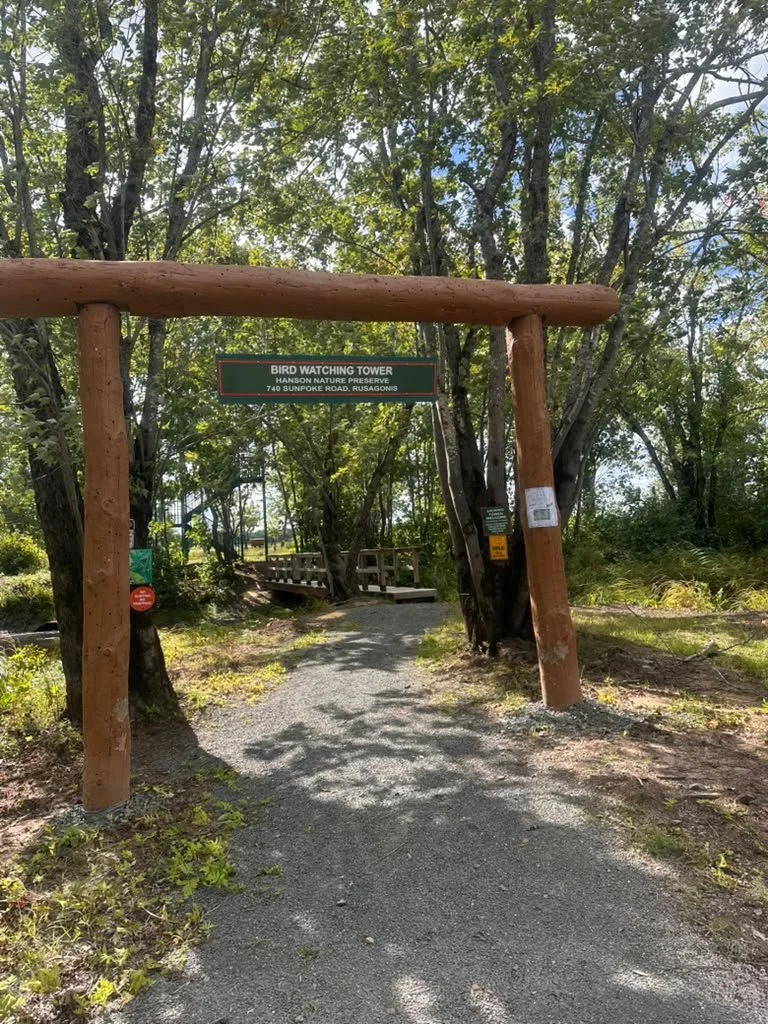
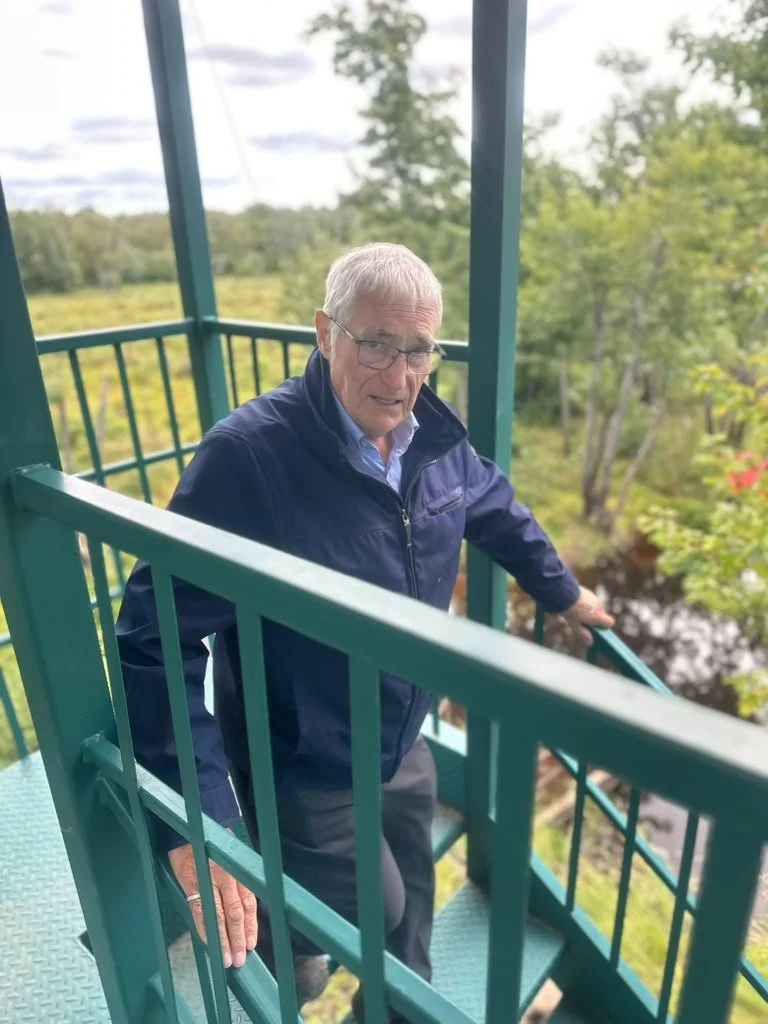
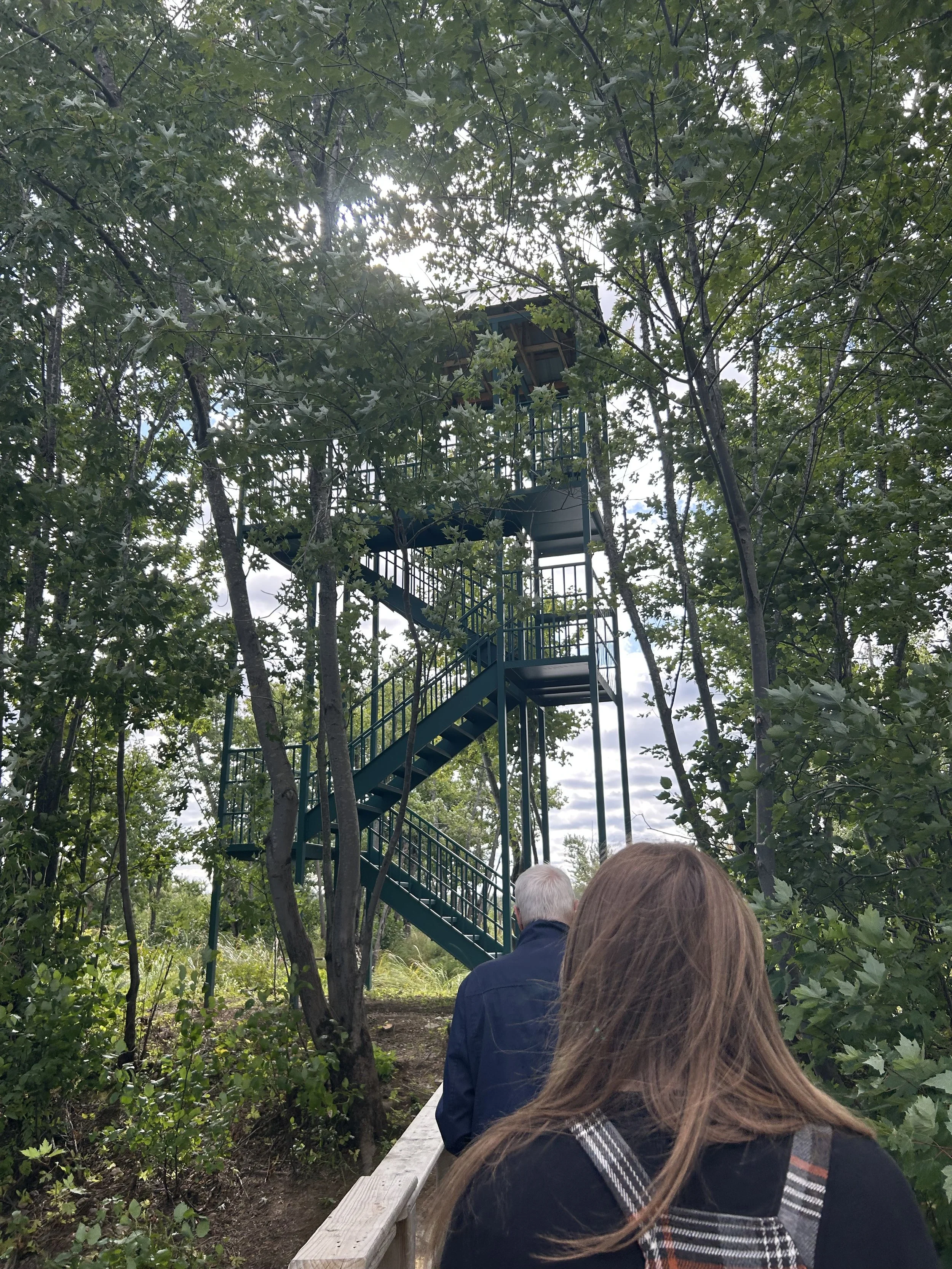
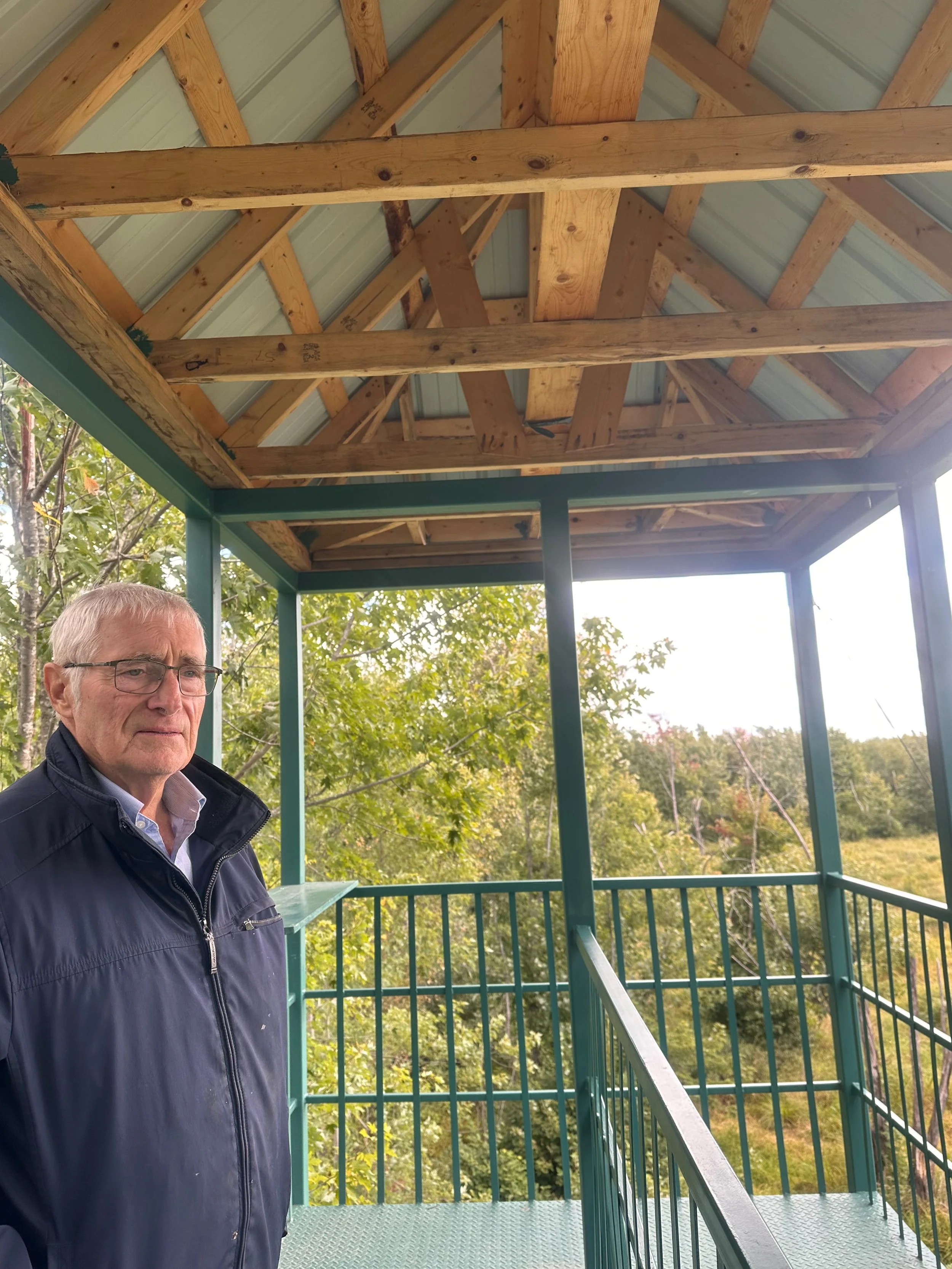
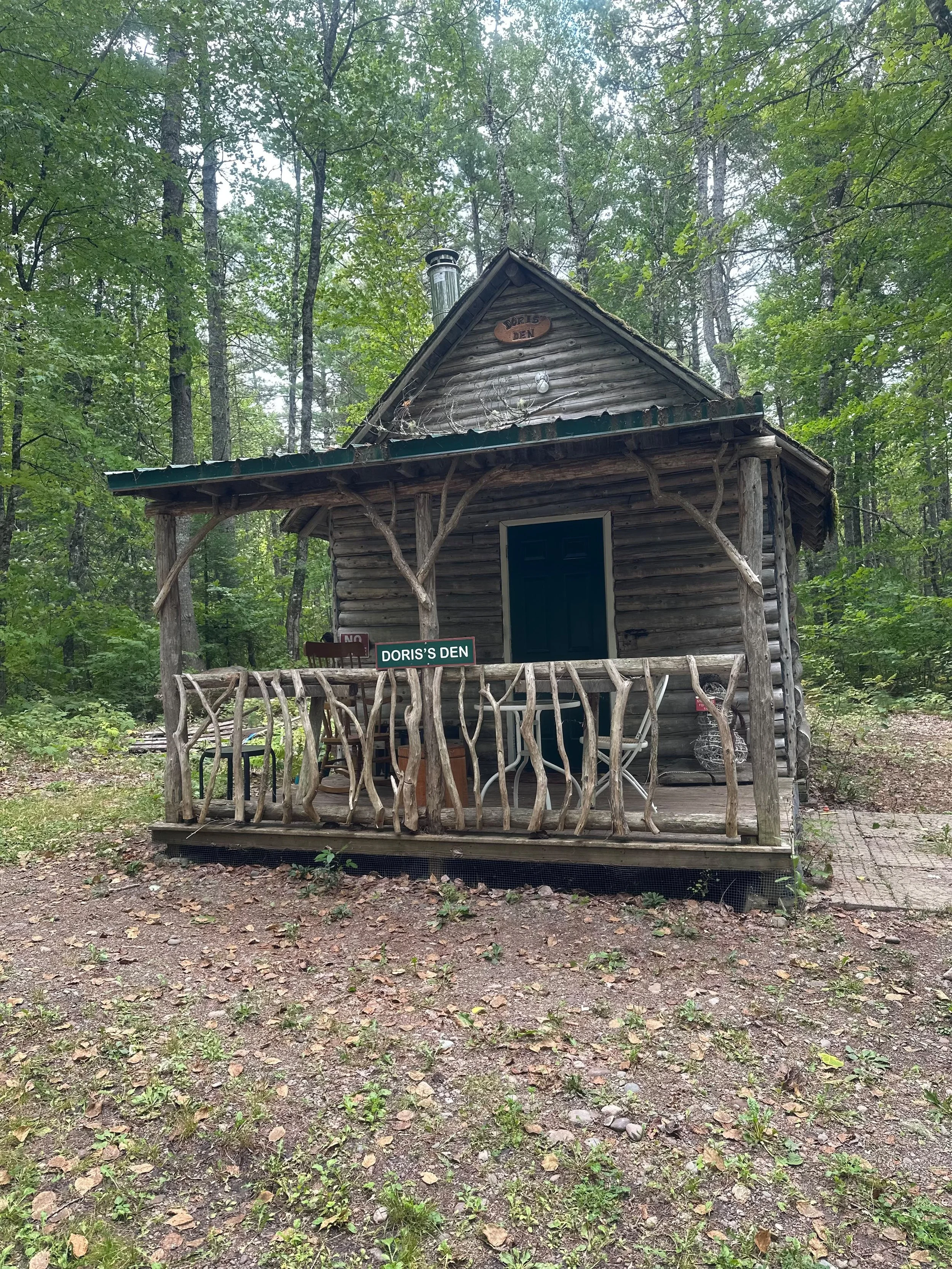
Robin's nature preserve is another part of the experience, where the focus shifts from artwork to the landscape itself. As we explored the property, we came across the Bird Tower Watch and Gene's Trail, each offering a different way to experience the area and its natural surroundings. There is also the Wind Phone, tucked away in the nature preserve. It's a simple but meaningful idea: a phone where people can talk to someone they have lost, even though no one is on the other end.
These are very different experiences from walking through a gallery, but they have something in common. They give people a reason to stop, explore and connect with the place around them. That was one of the things that stood out to us throughout our visits. Robin's work can be a sculpture in a park, a trail through the woods, a piece of local history or something unexpected along the way.
He finds different ways to bring those stories to where people are.
Making People Look Again
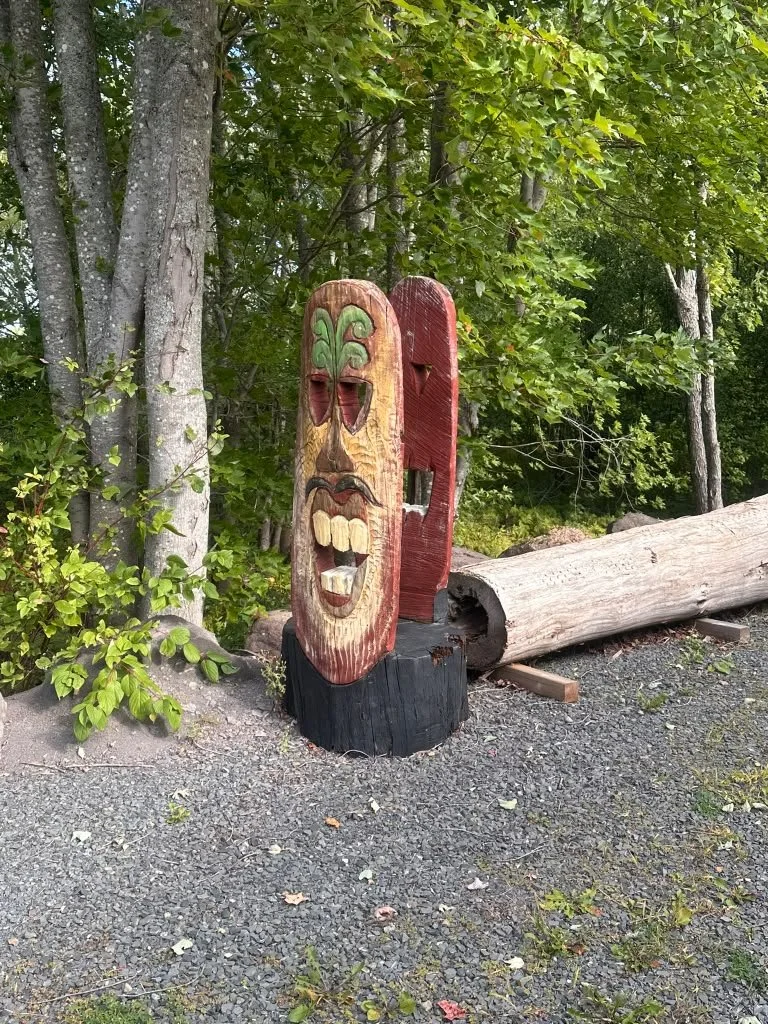
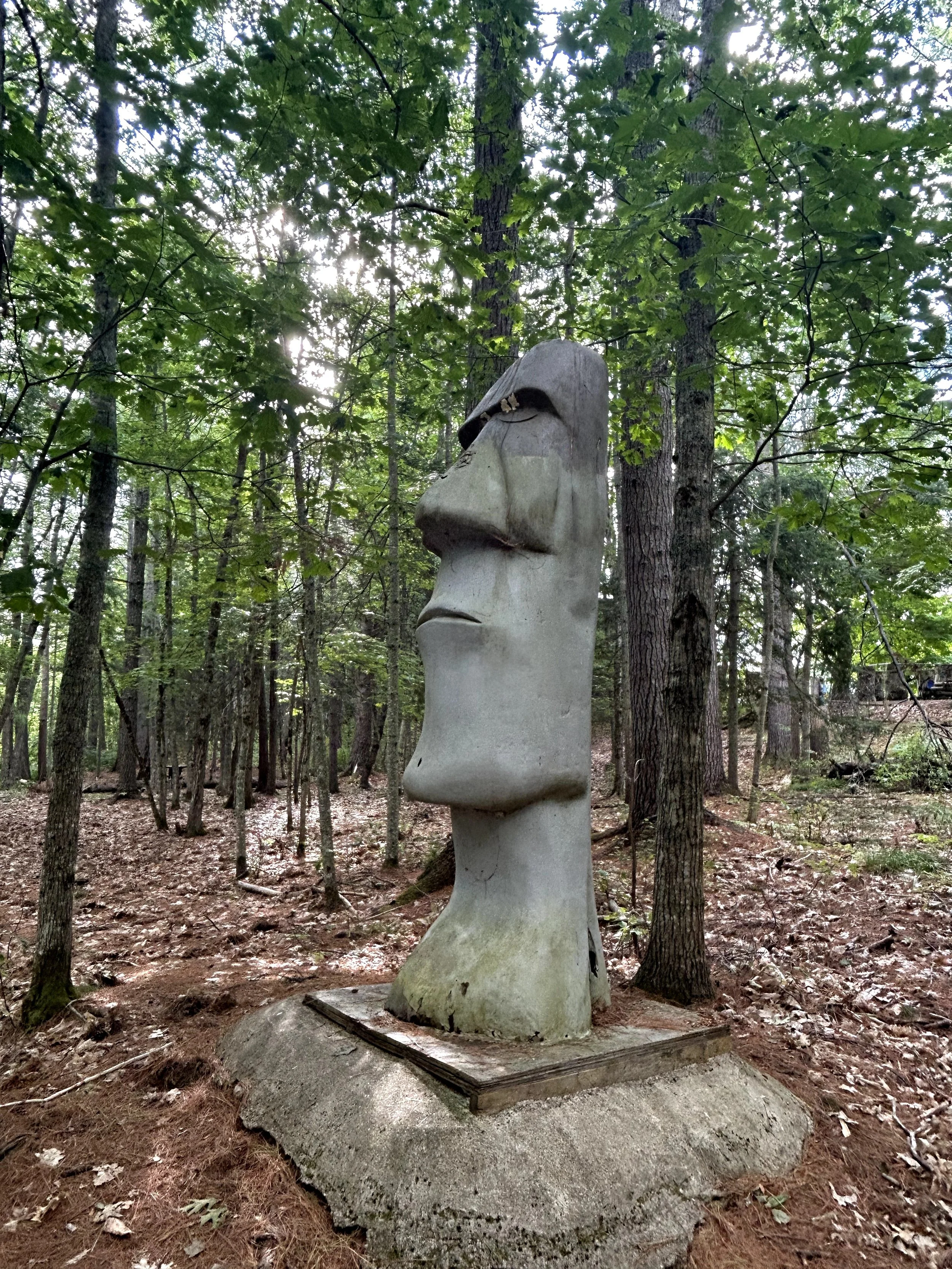
One of the things I enjoyed most about visiting Robin's gallery was that there was always something unexpected to discover. As we followed the trails, there were more stories, sculptures and little details that made us stop and look around.
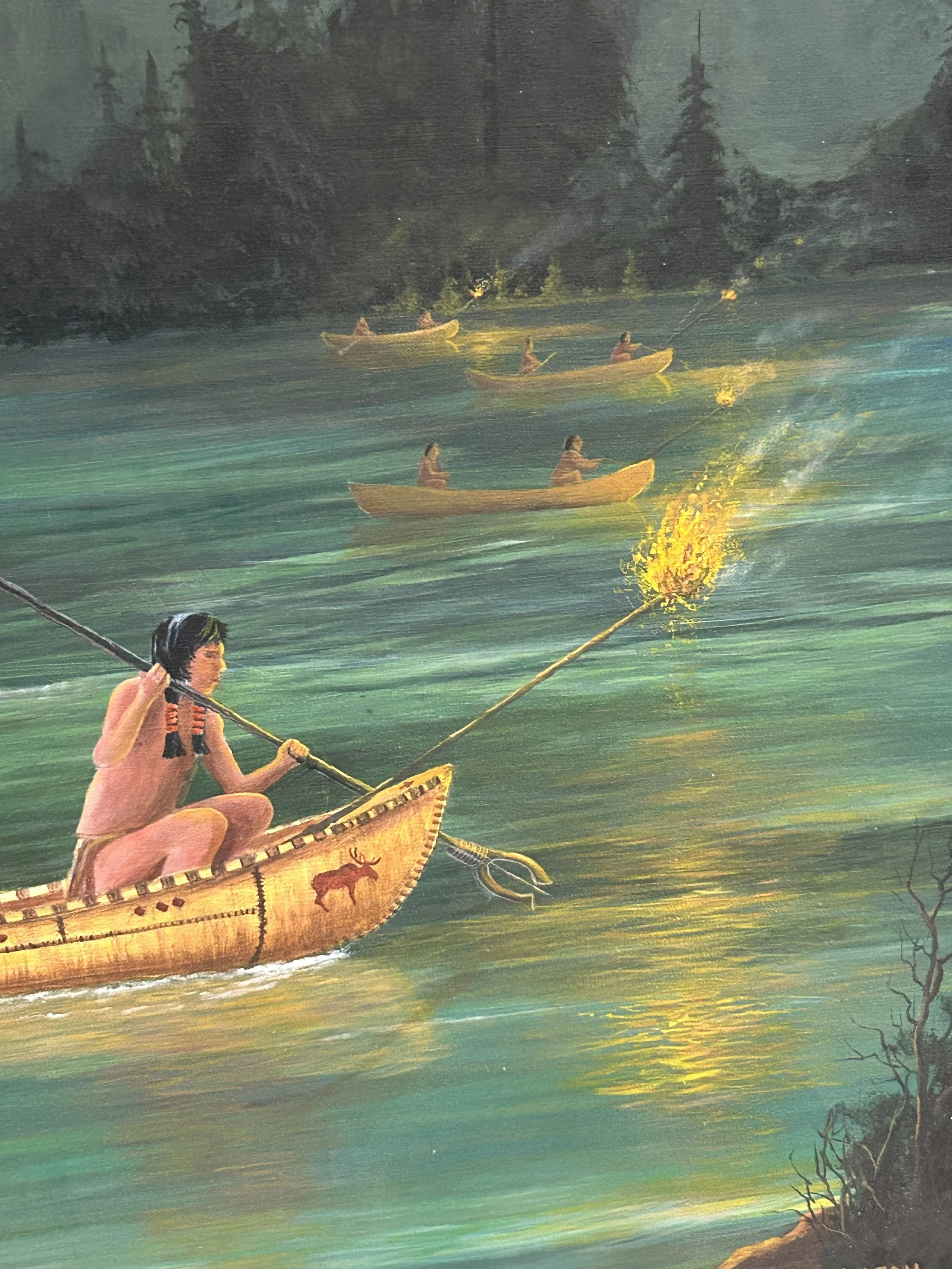
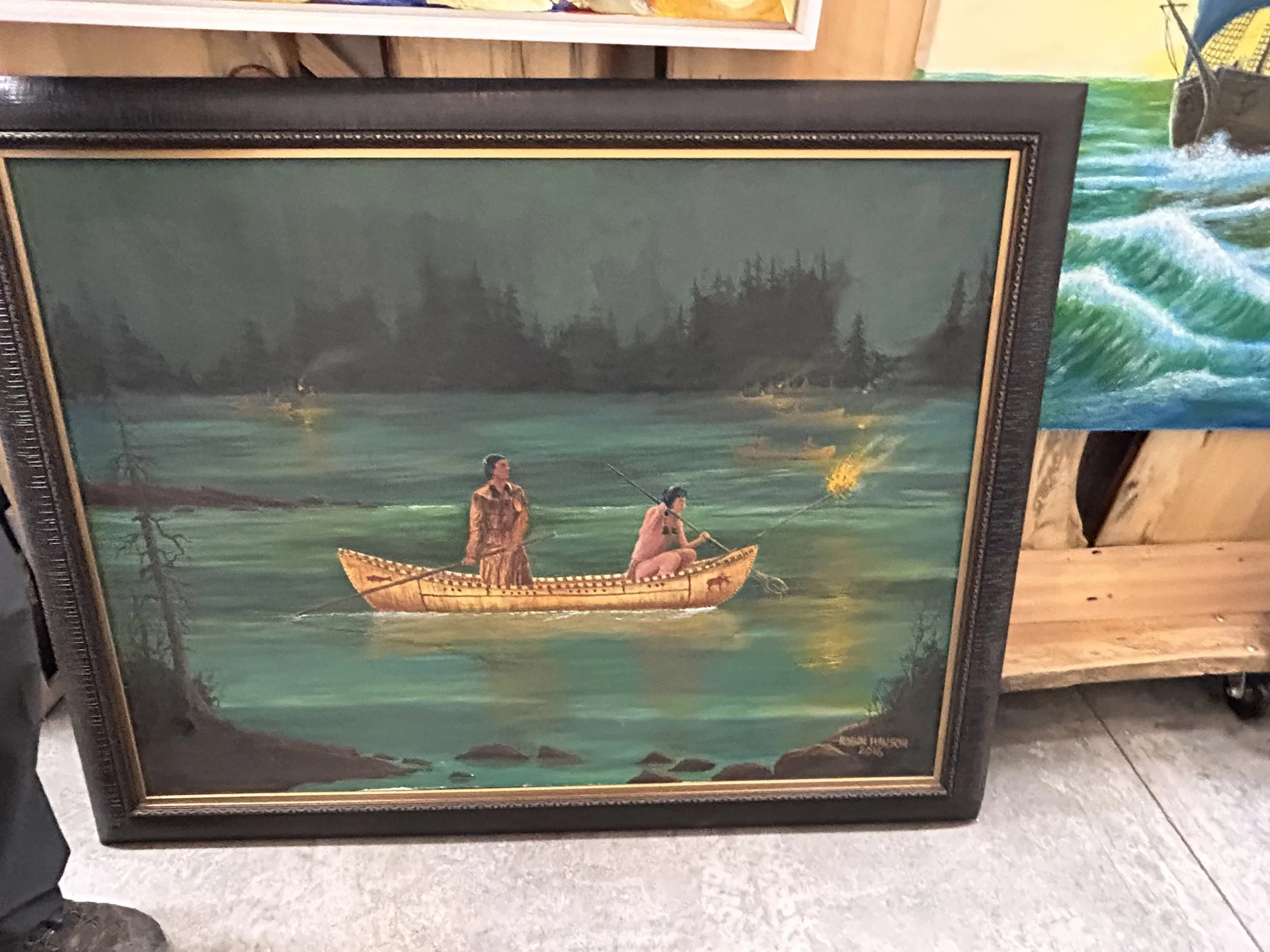
Detail of “Torch Light Fishing" by Robin Hanson
There's also an opportunity to connect, to be part of the experience, and I think that's what makes Robin's work so interesting. You don't always know what you're going to find, but there is usually something that catches your attention and makes you want to know more.
Whether it's a piece of art, a story about the land or something from the community's past, his work gives you a reason to slow down and take a closer look.
After seeing Robin's work in different communities and then hearing the stories behind it from Robin himself, we left wanting to know more.
His work shows how art can become part of a place, whether it's in a gallery, along a trail, in a park or somewhere you simply happen to come across it.
But for Robin, it also seems to be about what comes next.
He wants the work, the histories and the spaces he has created to continue long after him. He is putting thought into how they can be cared for and remain part of the community, so that people can keep discovering them, learning from them and enjoying them.
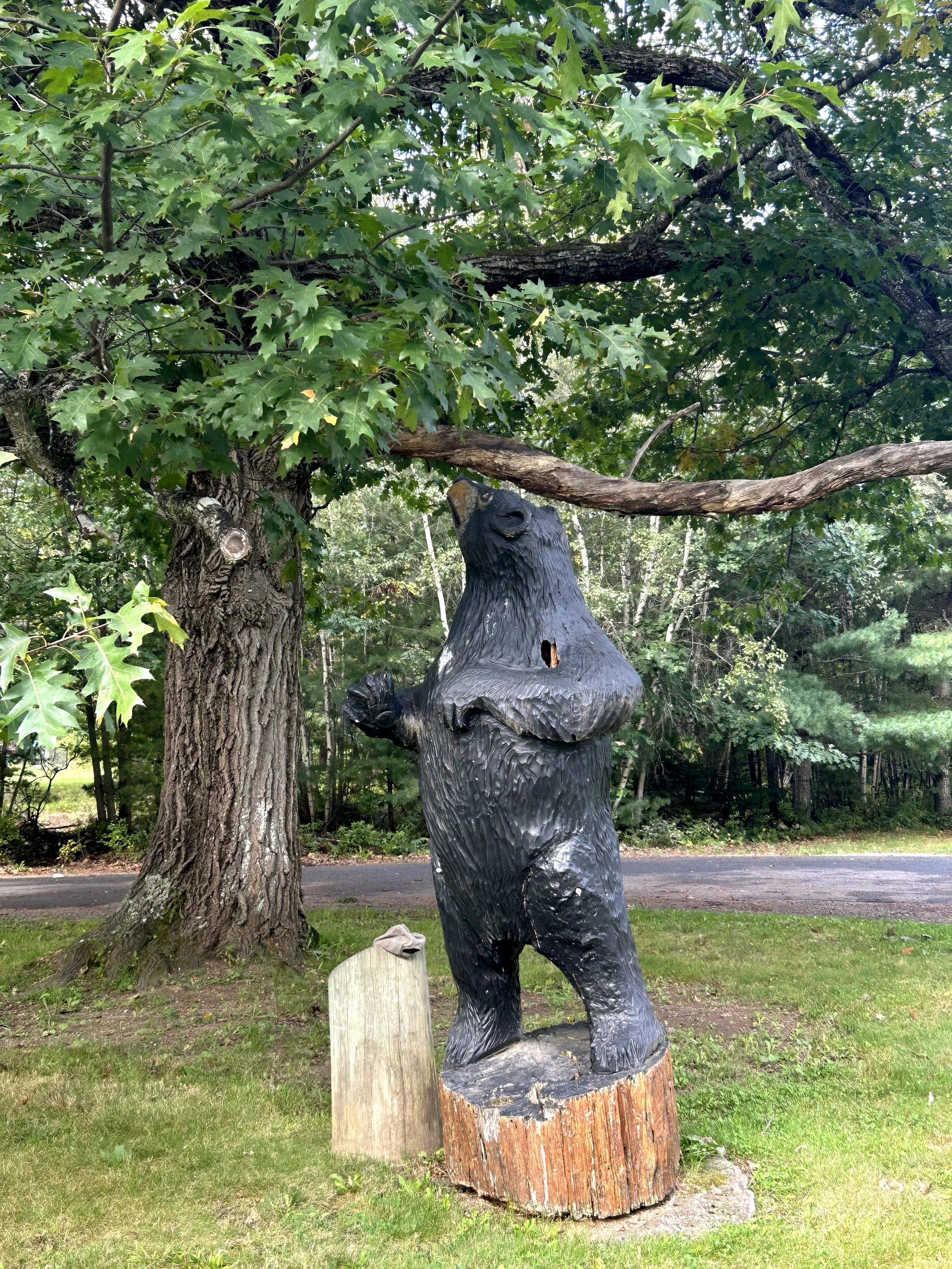
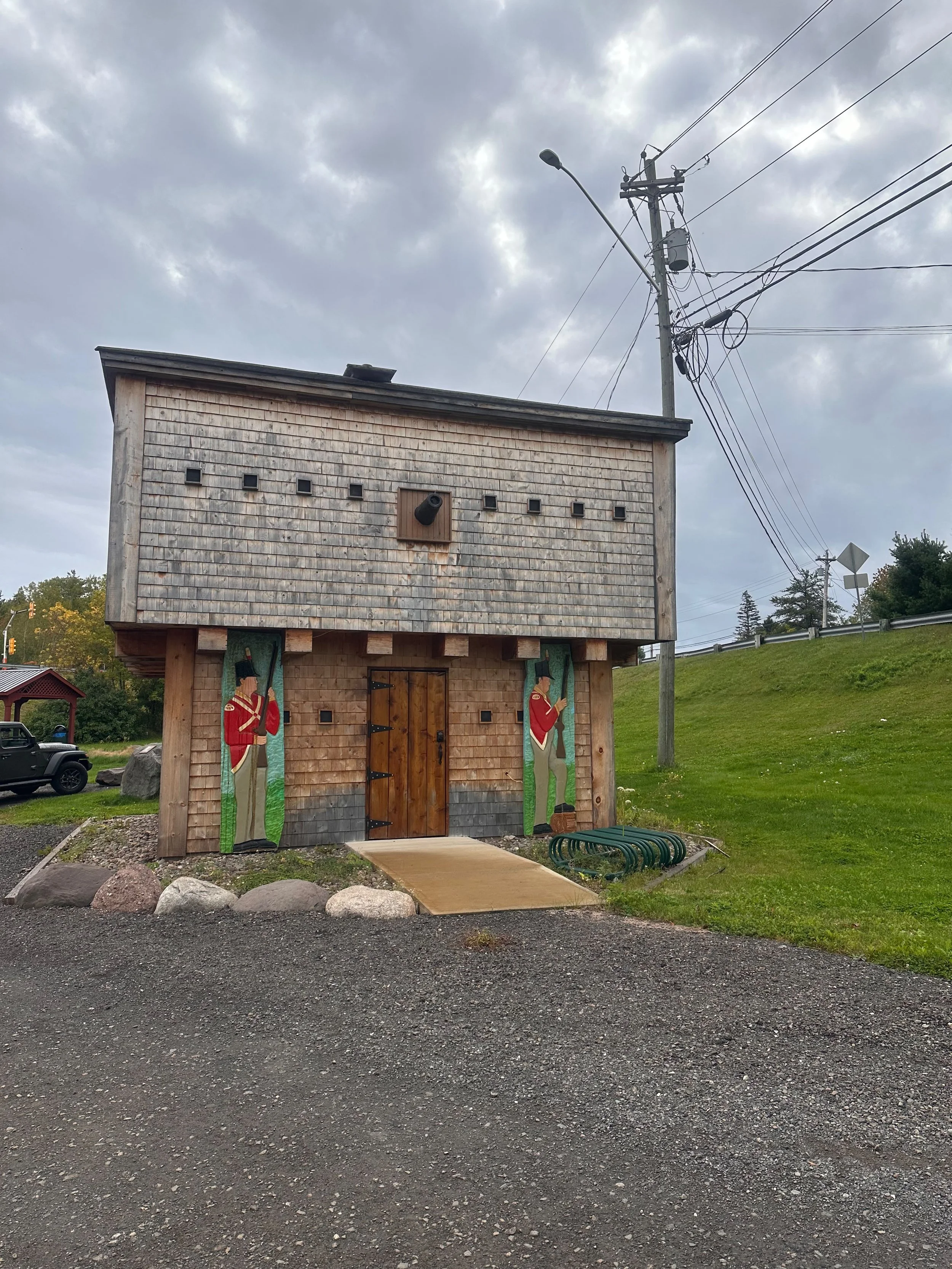
Maybe that's the legacy Robin is building, not just a collection of art, but places and experiences that people can continue to enjoy, learn from and connect with.
That's what stayed with us after our visits: there is more to discover, and probably a story behind it.